
Manufacturer vs Contractor: How Hanart Delivers Both
A curtain wall can be bought from a manufacturer, a contractor, or from a company that is both. The difference is not a label — it is who owns the interfaces between drawing, factory and site. This page explains the two-role delivery model Hanart operates, what single source accountability actually means in a contract, and how the same company can run a 200,000 m² factory and a 50-storey erection site without the handovers going wrong.
Published 9 October 2026 — Hanart Facade Engineering Team
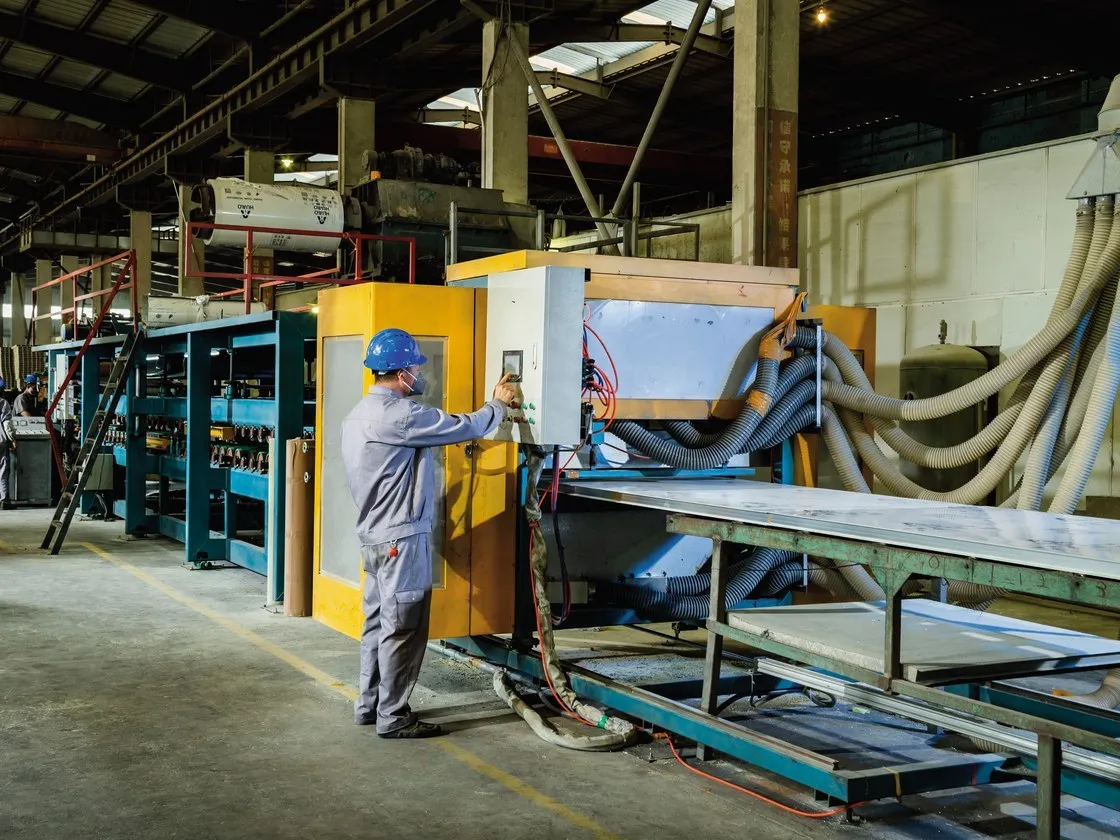
Owning the factory means the project team controls tolerance, glazing and sealant curing instead of hoping a sub-supplier got them right.
Why 'Manufacturer' and 'Contractor' Are Two Different Businesses
Owning the factory means the project team controls tolerance, glazing and sealant curing instead of hoping a sub-supplier got them right.
A curtain wall manufacturer runs a factory: extrusion machining, frame assembly, glazing lines, sealant application, curing ovens and dispatch planning. Its incentives are throughput, repeatability and utilization — and its output stops at the factory gate. A curtain wall contractor runs projects: design development, shop drawings, approval cycles, mock-up testing, procurement, logistics, crane planning, site erection, testing and handover. Its output is a weathertight envelope on a real building, achieved on a real schedule.
Most facade packages in the international market split these two roles between companies. The architect selects a system, a separate manufacturer supplies profiles and panels, another subcontractor erects them, and the main contractor manages the interfaces. Every interface is a handover, and every handover is where tolerance gets lost, schedules slip and responsibility gets disputed.
The alternative is a single company acting as both manufacturer and contractor. Hanart has run this model since 1995: a facade contractor with its own fabrication facility in Qingpu, Shanghai, that engineers, produces, ships, installs and services the same envelope. This page is written for procurement teams deciding which model to tender — and for the engineers who have to make either model work on site.
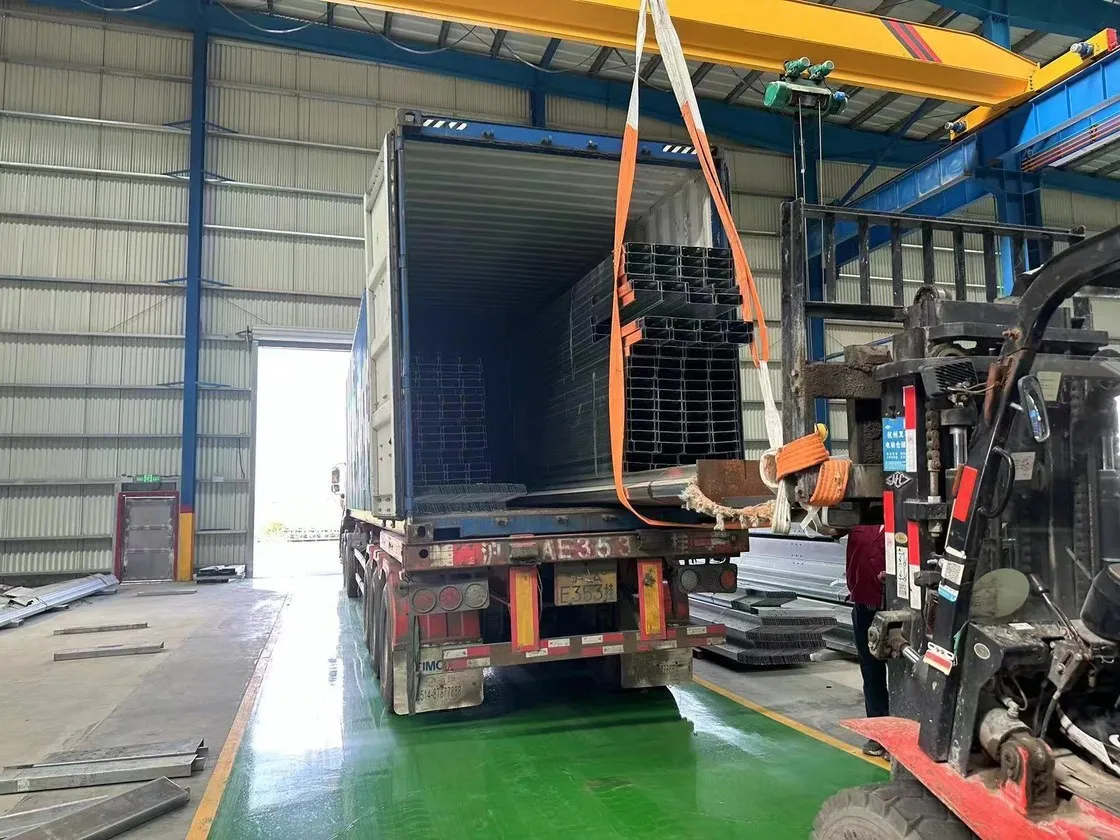
When the factory and the site report to one project manager, export packing, logistics and erection sequencing are planned as one chain.
What Each Delivery Model Actually Buys
When the factory and the site report to one project manager, export packing, logistics and erection sequencing are planned as one chain.
The three dominant models are manufacturer-only, contractor-only, and manufacturer-contractor. Each has a different cost profile, risk profile and management burden:
Manufacturer-only supply. You buy profiles, panels or complete units from a factory at a competitive per-square-metre price. You own the coordination: your contractor receives the goods, checks tolerances against its own design, and erects them. If the system has a latent design flaw — a condensation path, a thermal bridge, an anchorage incompatibility — the manufacturer's warranty typically stops at dispatch, and the erection contractor inherits the problem.
Contractor-only installation. You hire a facade erector with site capability but no production of its own. The contractor sources panels from whatever factory offers the price, which means the engineering intent is only as good as the sub-supplier's execution. Tolerances accumulate: the factory builds to its own internal standard, the contractor erects to another, and the performance test reveals which standard actually won.
Manufacturer-contractor (integrated). One company designs the system, makes the panels, erects them and services the building afterwards. The price can be the same or lower than the split model because the integrated bid removes the sub-contractor margin and the double logistics. More importantly, the risk is concentrated where it can be managed: one project manager owns the drawing, the factory batch and the site crew.
Hanart's position is that the integrated model is not automatically better — it is better only when the company genuinely controls all four stages. A factory without engineering is just a warehouse of extrusions; a contractor without a factory is just a broker of other people's risk. The sections below describe what Hanart actually controls at each stage, and what a buyer should verify before trusting any integrated claim.
The Single Source Accountability Argument
Single source accountability means that when water leaks, the glass cracks or the wind test fails, there is exactly one company that has to answer — and it cannot point at the factory, the transporter or the erector. In a split-contract facade, a water test failure triggers a causation conference: the design office blames the fabrication tolerance, the factory blames the site tolerances, the site blames the sealant contractor, and the owner pays for the delay while lawyers argue.
In an integrated model the same failure has one investigation. Hanart's quality system (ISO 9001) treats a failed test as a process defect to trace from drawing through production batch to installation method. The owner's benefit is concrete: a single warranty, a single point of contact during the defects liability period, and aftercare performed by the team that built the building — which knows where every settlement joint and critical sealant bead sits.
The contract reflects this. Hanart's tender documents offer a single PO covering design, supply, installation and commissioning, with one performance warranty for air, water, wind and structural behaviour. This is materially different from the common arrangement where the owner separately purchases system supply (warranted by the manufacturer) and installation (warranted by the erector), leaving the interface unwarranted by anyone.
How Hanart Delivers Both Roles: Four Stages, One Line of Responsibility
Stage 1 — Engineering and design development. The facade engineering team (structure, thermal, acoustics, fire) develops the system around the project's performance specification before any profile is cut. Structural verification follows the applicable code — GB 50009, ASCE 7 or EN 1991-1-4 — and the calculation package is issued with the tender. This stage is also where value engineering happens: changing a gasket profile or a glass build-up in design costs days; changing it on site costs months.
Stage 2 — Fabrication in our own facility. The Qingpu facility runs CNC machining to ±0.5 mm, frame assembly with documented torques, glazing and sealant application in controlled conditions, and a curing regime that does not depend on the weather. Because the same engineering team that designed the system writes the production instructions, fabrication is a controlled execution of the design rather than an interpretation of it.
Stage 3 — Logistics and erection. Panels travel to site in customs-optimized export crates with erection sequencing planned in the same schedule file as production. Site crews work from the same digital model and set-out data the factory used. ISO 45001 site safety management and engineered lifting plans apply to every panel hoisted.
Stage 4 — Testing, handover and aftercare. Mock-up and field testing (ASTM E283 air, E330 structural, E331 water or the local equivalents) verify the as-built envelope. Commissioning documents, as-built records and maintenance programs are handed over with the building; the aftercare team that built the facade services it under the same warranty.
What a Buyer Should Verify in Any Integrated Bid
Integrated claims are easy to print and hard to verify. Hanart recommends the same audit to any tenderer, including its own bids. First, tour the factory and check whether the production lines actually run the project's system or only similar ones; tooling investment follows the systems a company really sells. Second, ask who holds the engineering licence and the relevant grade qualifications — in China that means Grade-I contracting and Class-A design qualifications, which Hanart holds. Third, review the quality certificates: ISO 9001, 14001 and 45001 management systems audited by an independent body. Fourth, check track record: Hanart publishes its reference list openly, including six Luban Prize projects since 2005 — the national engineering quality award in China.
The company background is short and verifiable: founded 1995, registered capital RMB 100.5 million, a top-50 Chinese curtain wall contractor since 2005, an overseas contracting qualification granted in 2009 (the license that allows direct international delivery), and more than 30 provincial-level engineering awards on top of the six Luban Prizes.
For delivery, the same single-role reasoning applies internationally. Choosing Hanart as manufacturer-contractor means one tendered price, one engineering sign-off, one factory audit and one site contractor to manage — and one warranty document at handover. The model is not right for every owner (see the decision framework below), but where accountability and schedule matter more than splitting risk across vendors, it concentrates the risk exactly where it can be fixed: in the hands of the people who made the building.
Decision Framework: When Integrated Delivery Wins
The integrated model earns its keep when any of the following is true: the project is fast-tracked (interfaces cost schedule); the specification is performance-based (interfaces cost engineering quality); the building is tall or complex (interfaces cost safety and tolerance control); the owner is overseas and cannot supervise the factory directly (one point of contact); or the facade is being bought for a long asset life (aftercare consistency matters). It is less compelling for small punch-list style packages where a local erector with a standard system is cheaper — and Hanart will advise honestly when a simpler model fits the project better.
To explore the model on your project, send the drawings and the performance specification to bob@hanartfacade.com or call +86-21-5106 1751; the engineering team replies with a system recommendation, a delivery structure and a schedule outline, typically within 48 hours.
Frequently Asked Questions
What is the difference between a curtain wall manufacturer and a curtain wall contractor?
A manufacturer runs a factory and supplies panels, profiles or complete units; a contractor runs projects, from design development through installation and testing. Hanart is both: it engineers, fabricates in its own Qingpu facility, installs and provides aftercare under one contract.
What does single source accountability mean in a facade contract?
It means one company is contractually responsible for design, fabrication, installation, testing and aftercare. When something fails, there is one warranty holder and one point of contact, instead of a dispute between the manufacturer and the erector about whose tolerance caused the problem.
Is an integrated manufacturer-contractor always cheaper?
Not always on first cost — but the integrated bid removes the sub-contractor margin and double handling, so it is often comparable or lower. The bigger advantage is risk concentration: one project manager owns drawing, factory batch and site crew, which typically reduces change orders and delay disputes.
How can an owner verify that a facade company really controls its factory?
Audit the factory and check which systems its lines actually run; verify engineering and contracting qualifications (in China: Grade-I contracting, Class-A design); review ISO 9001/14001/45001 certificates; and inspect the reference list, including whether the company publishes quantified project data and award records.
Which projects are best suited to the integrated delivery model?
Fast-tracked projects, performance-based specifications, tall or complex buildings, overseas owners who need a single point of contact, and assets with long service lives where aftercare consistency matters. For small standard packages, a local erector may be cheaper.