Luban Prize Landmark Projects — Six National Landmarks

Six curtain wall and metal roofing projects elevated to China's national quality honor between 2008 and 2015 — a stadium, a museum, an assembly hall, two transport terminals and a research facility, plus a commercial complex.

  • National Indoor Stadium · 2008
  • Zhejiang Art Museum · 2008
  • Tianjin Airbus · 2009
  • Taiyuan Airport · 2009
  • Shanghai Synchrotron · 2009
  • Senlan Plaza · 2015
What the Award Means

The Luban Prize is not a curtain wall award

It is the highest national engineering-quality honor in Chinese construction. Understanding what it takes to win one tells you how a facade contractor behaves after the marketing stops.

The Luban Prize (Lu Ban Jiang) is named after Lu Ban, the legendary Chinese master builder, and is awarded annually by China's construction industry at national level. Projects are nominated through provincial review, then evaluated on engineering quality, technical innovation and social value — the same three lenses a building owner applies when the temporary contractors leave: did the work perform, was the work smarter than the standard, and does the building serve the public it was built for. Winning is not a beauty contest for architecture; it is a post-occupancy-style audit of construction quality across an entire building, in which the facade is one audited trade among many.

That audit context is precisely why these six projects matter to an international owner. A curtain wall that survives a Luban audit has been checked for watertightness, airtightness, structural integrity, thermal performance and fabrication accuracy against one of the strictest quality regimes in Asia — by juries who do not take a contractor's word for anything. When we say a facade was "designed, fabricated and installed under one contract," the Luban series is the documented proof that the model produces audited, durable results rather than promises.

The series also demonstrates range. No two of the six buildings share a typology: an Olympic-era stadium, a sculptural art museum, a high-value industrial assembly hall, an airport terminal, a national research facility and a commercial complex. A contractor can win one award by being excellent in one building type. Winning six across five years and six typologies is a statement about process — shop-drawing discipline, fabrication quality control and site execution that travel from project to project regardless of the building program.

The Six Projects

Landmarks, in the order they were honored

National Indoor Stadium, Beijing 2008
Luban Prize 2008 · Sports

National Indoor Stadium

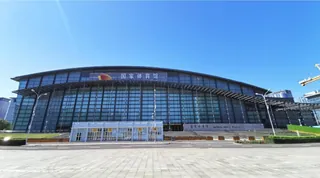
Large-span metal roof and facade on the 2008 Olympic programme — envelope engineering delivered against an Olympic deadline that could not slip.

Scale profile · Full-span Olympic sports roof

Read case study →
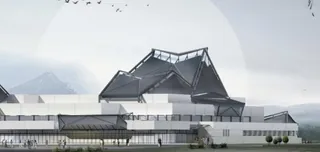
Zhejiang Art Museum, Hangzhou
Luban Prize 2008 · Cultural

Zhejiang Art Museum

Precast stone and point-supported glass resolved into curved volumes — daylight treated as a curatorial material for an art museum in Hangzhou.

Scale profile · Curved multi-storey museum envelope

Read case study →
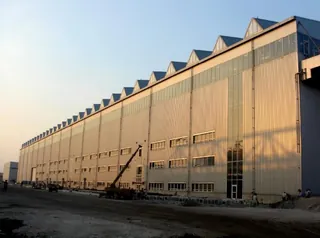
Tianjin Airbus assembly hall
Luban Prize 2009 · Industrial

Tianjin Airbus Assembly Line

A 600-meter-scale standing-seam metal roof protecting an aircraft assembly line — leaks were not an acceptable risk above high-value production.

Scale profile · 600m clear-span industrial roof

Read case study →
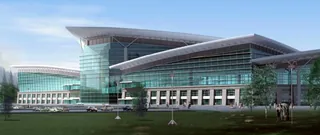
Taiyuan Airport terminal roof
Luban Prize 2009 · Airport

Taiyuan Airport Terminal

Long-span roof and terminal glazing engineered around drainage philosophy — an airport envelope built to move passengers for decades without interruption.

Scale profile · Large-span hub terminal roof

Read case study →
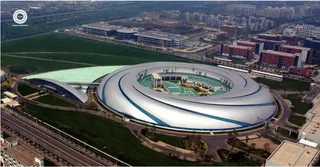
Shanghai Synchrotron precision envelope
Luban Prize 2009 · Research

Shanghai Synchrotron Facility

A national research facility whose envelope stability protects scientific measurement — also named one of 100 National Classic Projects of the 60th Anniversary.

Scale profile · Precision accelerator ring building

Read case study →
Senlan International Plaza, Shanghai
Luban Prize 2015 · Commercial

Senlan International Plaza

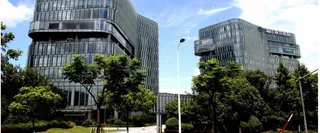
A unitized curtain wall for a Pudong commercial complex — factory-fabricated panels and fast erection on a constrained central-city site; our sixth Luban Prize.

Scale profile · Multi-tower mixed-use campus

Read case study →
Scale & Scope

Six landmarks — read by the scale of the job

A facade contractor is chosen on two axes: the building type and the physical scale of the envelope. This record is documented honestly — every scale profile below is the one the project actually demanded, published without speculative height or area figures.

B2B buyers benchmark envelope contractors by evidence, and scale is the second axis of that evidence. A developer asking "have you built at my scale?" is really asking whether the engineering, fabrication and site teams have held tolerance at a comparable physical magnitude — whether the envelope problem was a 20-storey curtain wall or a 600-metre-span roof. The six Luban landmarks answer that question in six different registers, and the matrix below records each project by typology, scale profile, envelope system and award year, so the comparison is direct rather than anecdotal.

One figure is published from the verified record and repeated across the site: the Tianjin Airbus assembly hall is a 600-metre clear-span metal roof — the largest single-span statement in the collection. For the other projects, the scale profile describes the physical challenge the envelope resolved — full-span arena roof, curved museum envelope, large-span terminal, precision research ring, multi-tower campus — because those are the parameters Hanart's engineers documented, and we do not publish height or area numbers we cannot source. If your programme needs the same discipline at a specific scale, the matrix below is the starting point for an enquiry.

Project Typology Scale profile Envelope system Award
National Indoor Stadium Olympic sports venue Full-span metal roof over a Games arena Metal roofing + curtain wall Luban Prize 2008
Zhejiang Art Museum Cultural institution Curved multi-storey museum envelope Precast stone + point-supported glass Luban Prize 2008
Tianjin Airbus Assembly Line Industrial production hall 600m clear-span roof Standing-seam metal roofing Luban Prize 2009
Taiyuan Airport Terminal Transport / aviation Large-span terminal roof over a hub concourse Metal roofing + terminal glazing Luban Prize 2009
Shanghai Synchrotron Facility National research infrastructure Precision ring building for an accelerator Curtain wall + precision enclosure Luban Prize 2009
Senlan International Plaza Mixed-use commercial Multi-tower campus-scale development Unitized curtain wall Luban Prize 2015
What the Series Proves

Six projects, one working method

Read the award years as a quality-control timeline, not a roll of honor. The 2008 pair forced the organization to perform under Olympic deadline pressure while the 2009 trio — assembly hall, airport, research facility — tested three completely different envelope disciplines within twelve months. The gap to 2015 is equally informative: the Senlan Plaza award came after a full commercial cycle of unitized curtain wall delivery, confirming that the quality system that won the earlier prizes remains intact as the company scales to larger commercial packages.

For an owner writing a tender today, the practical takeaway is simple. Every one of these six envelopes is still in service, and every one was delivered by the same in-house sequence: engineering and BIM, fabrication in our own Qingpu factory, self-managed installation and documented handover. If your project occupies a similar typology, ask our engineers how the system decisions from these landmarks apply to your envelope — the sports venues collection explains the stadium and roof work, and our milestones page places the awards in the company's wider history. Then request a similar quote with your drawings.

Build with a six-time Luban winner

Send your drawings for a free facade proposal within 24 hours — the same engineering and fabrication system behind these six landmarks.