Installation: The Most Underestimated Stage

A facade's performance is engineered in the office and built in the factory — but it is earned on the site, panel by panel, at heights, in weather, against a schedule shared with a dozen other trades. Installation is the last link of the quality chain, and the link where the least-controlled variables live. We treat it as an engineering discipline, not a labour task: surveyed, planned, lifted, calibrated and sealed to the same standard as the shop drawing.

Methodology

How installation is engineered, step by step

Setting-out & survey control

Installation starts with the building's actual geometry, not the drawing's. Our survey teams establish control grids and datum levels, and the tolerance budget — how much misalignment the structure can show and the facade can still absorb — is agreed before fixing starts. Anchor positions are set from this survey so the panels land where the drawings promised.

Engineered lifting plans

Every panel is lifted by a method designed for it: crane reach and capacity, rigging geometry, panel orientation at transfer, and the crew positions on the working platform. Lifting plans are prepared in advance, reviewed with the subcontractor interfaces, and rehearsed for the critical first lifts — because a panel that swings wrong costs time at best and a life at worst.

Alignment & fix sequence

Panels are offered, aligned in three axes, temporarily fixed, then permanently anchored in a documented sequence that controls cumulative error — the facade is built straight by procedure, not by hope. Tolerances are measured at check points and recorded, so the as-built position of every anchor is traceable.

Sealing & weather completion

Joints between panels and at interfaces receive their final seals in controlled conditions, with surface preparation, primer and application logged. Weather-window planning is part of the schedule: sealing is sequenced around rain forecasts, wind and temperature, so a joint is never closed in conditions that will make it fail in year two.

Safety: ISO 45001 is the minimum, not the goal

Facade installation is working at height, with cranes, glass and weather — the risk profile is real, and our management system treats it that way. Our occupational health and safety management follows ISO 45001 (aligned with the GB/T 45001 standard in China): hazard identification, permit-to-work control, PPE and fall-protection programs, daily briefings and incident reporting that feeds back into the plans, not just the records.

The practical result our clients see is a site that runs smoothly: competent crews, inspected equipment, controlled access and no surprises between the safety plan and the site reality. Safety is not an event; it is the operating system of an installation program that arrives on schedule.

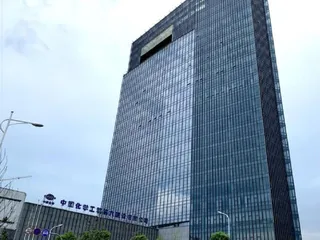
Grid-glass office tower seen from the street below
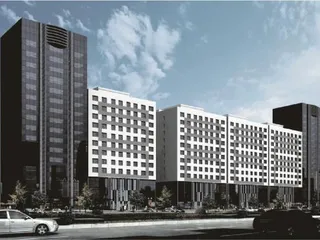
Symmetrical mid-rise buildings facing a courtyard of trees

Schedule and interface management

The facade never builds alone. It shares the tower with structure, MEP, fire systems and finishes, and every handover — floor slabs released for facade work, crane availability, hoist priority — is an interface that can stop the envelope. Our project managers run the facade program as a sub-schedule inside the master program: critical path logic, look-ahead meetings, and early warnings issued on the interfaces we depend on, because a facade contractor who waits to be told about a slip is a facade contractor who is already late.

This discipline is what turnkey delivery rests on: single-responsibility contracting means our site manager reports progress against the same program that our factory feeds, so a unitized panel arrives the week the tower is ready for it. See the turnkey model for how the contract structure guarantees the coordination.

Site installation is also where the envelope meets its unitized curtain wall systems — the factory-built panels whose whole advantage is realized only if the lifting and alignment program is as disciplined as the production line.

Overseas Track Record

Installation across climates and time zones

Since 1995 our site teams have installed envelopes across China and overseas — the same methodology, adapted to the climate, code and culture of each market, backed by business offices in seven countries for coordination on your local time.

Put your installation on a program, not a prayer.

Send your drawings and program dates — get an installation methodology, lifting strategy and schedule commitment within 24 hours.