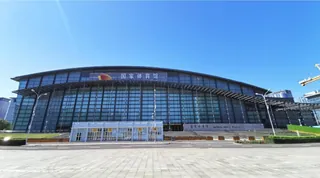
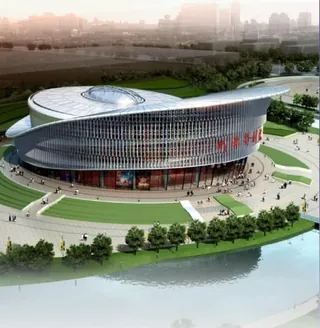
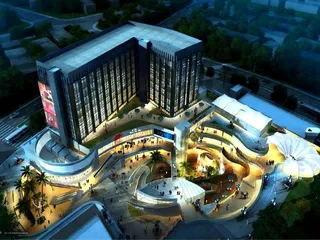
National Indoor Stadium, Beijing
Large-span metal roof and curtain wall on the 2008 Olympic programme. Envelope engineering compressed into an Olympic deadline — with the discipline to earn a Luban Prize the same year.
Read case study →More than 1,000 curtain wall and metal roof projects delivered since 1995. This is a selected portfolio — each entry documented as an engineering case study, not a marketing slide.
When a developer or general contractor evaluates a facade contractor, the first question is rarely capability — it is evidence. Have you built this building type before, at this scale, under this procurement model? The filter below sorts the portfolio by building use, so you can compare apples with apples: our airport discipline against your terminal, our tower work against your podium-to-crown scope.

Large-span metal roof and curtain wall on the 2008 Olympic programme. Envelope engineering compressed into an Olympic deadline — with the discipline to earn a Luban Prize the same year.
Read case study →
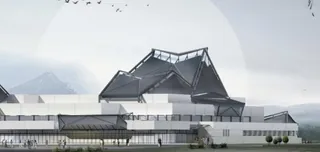
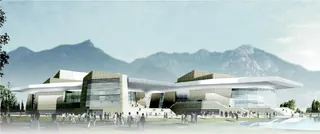
A sculptural museum resolved in precast stone and point-supported glass. Curved volumes where daylight control is a curatorial requirement, not a preference.
Read case study →
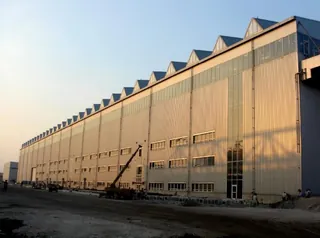
A 600-meter-scale standing-seam metal roof over an aircraft assembly hall. Zero-leak discipline above high-value production — holding dry since 2009.
Read case study →
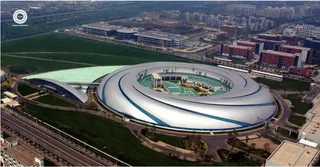
A national research facility where stability of the envelope protects stability of the beamline. Luban Prize 2009 and one of 100 National Classic Projects of the 60th Anniversary.
Read case study →
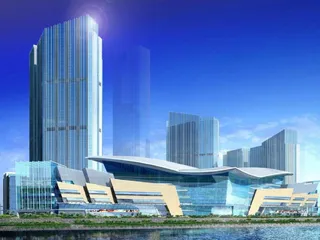
A unitized curtain wall for a Pudong commercial complex. Factory fabrication and fast site erection on a constrained central-city site — Hanart's sixth Luban Prize.
Read case study →
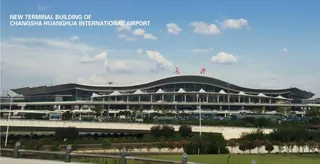
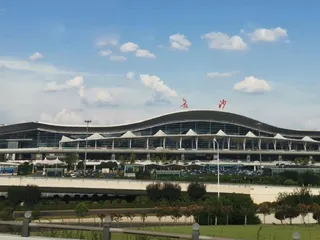
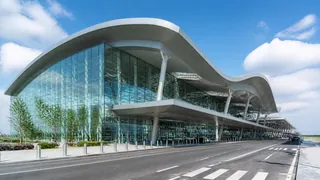
Long-span terminal roof and curtain wall where drainage philosophy decides longevity. A Luban Prize in 2009 for an envelope that keeps moving 100,000 passengers a season.
Read case study →
Terminal curtain wall delivered as an expansion of a live airport — phased handover, operational interfaces and zero interruption to a growing flight schedule.
Read case study →
A desert-climate facade engineered for high solar loads, sand abrasion and 50°C design temperatures — solar control resolved at the glass, not after the fact.
Read case study →
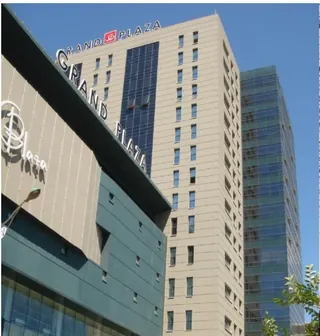
A commercial envelope engineered for -40°C winters — thermally broken frames, condensation control and a construction window measured in months, not years.
Read case study →
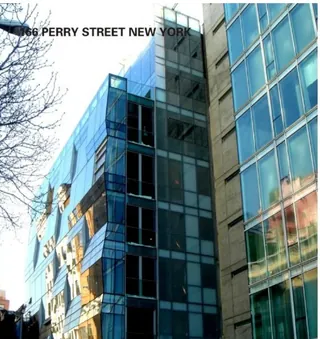
A unitized glass tower exported from Qingpu to Manhattan — logistics, US coordination and factory quality coordinated across twelve time zones.
Read case study →
Why sports envelopes fail — and how large-span metal roofing and facade detailing survive crowd, climate and television deadlines. Explore the collection.
View collection →
Terminals are the most demanding facade exam: huge areas, strict tolerances, zero tolerance for leaks and no shutdown window for repairs. Explore the airport record.
View collection →
The taller the building, the stronger the case for factory-made panels. Explore unitized glass delivered for high-rise commercial workspaces.
View collection →
In guest-facing buildings the facade is the brand. Glass, metal and stone resolved into one envelope where completion quality prices the room.
View collection →
Hospitals run on airtight envelopes: airborne infection control, acoustic privacy and 24/7 operating continuity. See how sealed unitized systems answer them.
View collection →
Apartment towers, villas and mixed-use developments — windows, balconies and rainscreen cladding engineered for comfort and long maintenance cycles.
View collection →
Shopping malls, museums, theaters and exhibition halls — atrium glazing, unitized walls and canopies that make destinations out of envelopes.
View collection →
Schools, universities and research campuses with daylight-optimized classrooms, lab envelopes and long-life maintenance strategies.
View collection →
Airtight envelopes, thermal-break cladding and fire-rated compartments for hyperscale and enterprise data centers — built around uptime.
View collection →More than 1,000 projects is not a marketing figure in isolation — it is the output of a single organization performing design, fabrication, project management, installation and handover under one contract since 1995. That structure is what makes the quantity meaningful for an owner: every project in this portfolio was engineered and installed by the same teams that will engineer yours, working to the same shop-drawing and quality-control discipline. The mix matters as much as the count. Stadiums taught us wind and drainage; airport terminals taught us tolerance and operational interfaces; research facilities taught us stability; overseas projects taught us logistics and code coordination.
Six Luban Prizes — the construction industry's highest national quality honor in China — arrived in a deliberate rhythm: two in 2008 (National Indoor Stadium, Zhejiang Art Museum), three in 2009 (Tianjin Airbus, Taiyuan Airport, Shanghai Synchrotron) and one in 2015 (Senlan International Plaza). A prize in one exceptional year can be luck; five across two consecutive years is a system. The Luban jury evaluates engineering quality, technical innovation and social value against the full Chinese construction industry — not a facade category award. For an overseas owner, treat it as third-party verification that our envelopes perform after handover.
The overseas record extends the evidence beyond China's borders: a unitized glass tower in New York (166 Perry Street), a commercial envelope engineered for -40°C winters in Ulaanbaatar (Grand Plaza), a solar-control facade for the Asian Olympic Council mansion in Kuwait, and university work in Virginia. Each was coordinated through Hanart's seven-country office network and delivered from the same Qingpu factory base. Browse the Luban landmark series or filter by type above — every card leads to a case study written by engineers.

Each case study on this site follows the same structure — the challenge (what made the envelope difficult), the system decision (why we chose that construction), and the result (what the delivered envelope had to survive). That narrative format is deliberate. A facade decision made in the abstract is a guess; a facade decision made against a documented challenge is an engineering record you can compare with your own project conditions.
When you read a case study, check the parameters table against your requirements: system type, glazing strategy, climate assumptions and award status are stated plainly. Where a figure is project-confidential, we say so rather than inventing a number. If a project resembles your own scope — same building type, similar climate, comparable schedule pressure — the fastest next step is to send us your drawings and let the same engineers who delivered these envelopes size your package. Request a quote and receive a proposal within 24 hours.
Send drawings, get a facade proposal in 24 hours — engineered, fabricated and installed by one contractor, one responsibility.