
Aluminum Cladding Systems for Modern Architecture
Aluminum cladding systems deliver lightweight durability, design freedom and predictable weathering at a lower life-cycle cost than stone or glass. We engineer, fabricate and install solid aluminum panels, cassette systems and perforated screens for airports, stadiums, commercial towers and transport hubs across Asia, the Middle East and Europe.
What our aluminum cladding system includes
Aluminum is the most specified metal in contemporary facade design: it weighs one-third of steel, accepts almost any surface finish, and forms complex 3D shapes without the cracking risk of stone or glass.
System composition
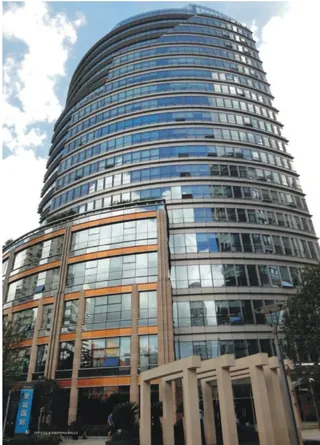
- Proven on commercial high-rises. Our aluminum cladding systems combine extruded aluminum cassettes with glass curtain wall subcontract packages — the same material strategy delivered on landmark office towers and shopping malls across China and overseas.
- Aluminum skin. 2.0–4.0 mm thick 3003-H14 or 5005-H14 aluminum sheet, CNC-cut and fold-formed into cassettes or flat panels with return edges for stiffness.
- Stiffening ribs. Internal aluminum hat-sections or Z-sections welded or riveted to the rear face; ribs prevent oil-canning and control flatness across large modules.
- Surface finish. PVDF (Kynar 500) spray coating in 2-coat or 3-coat system; color range from RAL and custom matches. Anodized finish (AA15–AA25) available for natural metallic appearance.
- Thermal break. Where insulation is required, a sub-frame with polyamide thermal breaks separates the aluminum panel from the structural wall, preventing condensation on the interior face.
- Mounting system. Concealed clip-and-rail or hook-on hanging systems; panels are removable for maintenance without disturbing adjacent units.
Our aluminum cladding is fabricated in certified partner factories with CNC punching, folding and welding equipment. The Qingpu facility performs incoming inspection, assembly verification and packaging for export shipment.
Surface finishes and applications
PVDF Coating
Coating thickness: 25–35 µm (2-coat) / 35–45 µm (3-coat)
Warranty: 20-year color retention
Typical use: Commercial towers, airports, stadiums
PVDF (polyvinylidene fluoride) offers the best UV resistance and color stability among architectural coatings. We use Kynar 500 or Hylar 5000 resin systems with color matching to RAL, NCS or project-specific samples.
Anodized Aluminum
Anodizing grade: AA15–AA25 (GB/T 8013)
Colors: Natural silver, champagne, bronze, black
Typical use: High-end commercial, cultural buildings
Anodizing creates a hard, transparent oxide layer that protects the aluminum while preserving its metallic appearance. Ideal for projects where a "true metal" look is required rather than painted color.
Perforated & Patterned
Perforation: CNC punching, 1–25 mm diameter
Open area: 10–50%
Typical use: Parking screens, sun shading, visual branding
Perforated aluminum panels combine aesthetic patterning with functional solar control. We can produce custom perforation patterns from project artwork, including logos and gradient densities.
Aluminum cladding system parameters
| Parameter | Solid Panel | Cassette Panel | Perforated Panel |
|---|---|---|---|
| Panel thickness | 2.0–4.0 mm | 2.5–3.0 mm | 2.0–3.0 mm |
| U-value (ventilated cavity) | ≤ 0.8 W/m²K | ≤ 0.8 W/m²K | ≤ 0.8 W/m²K |
| Air & water infiltration | GB/T 21086 Level 2; airtight ≤ 1.5 m³/h·m², watertight at 400 Pa | Same | Same |
| Typical module | 600×1,200 to 1,500×3,000 mm | 300×600 to 600×1,200 mm | 600×600 to 1,200×2,400 mm |
| Weight per m² | 5.4–10.8 kg (aluminum only) | 4.5–8.1 kg | 3.2–8.1 kg |
| Aluminum alloy | 3003-H14 / 5005-H14 | 3003-H14 | 3003-H14 / 5005-H14 |
| Surface finish | PVDF 2-coat / 3-coat / Anodized | PVDF 2-coat / Anodized | PVDF 2-coat / Powder coat |
| Mounting | Concealed clip / Rail / Hook-on | Hook-on / Lay-in | Concealed clip / Rail |
| Fire rating | Class A (GB 8624) / A2-s1,d0 (EN) | Class A | Class A |
| Thermal break | Optional polyamide strip | N/A | Optional |
| Wind load | ≤ 5.0 kPa | ≤ 3.0 kPa | ≤ 3.0 kPa |
| Seismic zone | ≤ 8 degree (GB 50011) | ≤ 8 degree | ≤ 8 degree |
Values are representative. Project-specific design follows GB 50009, GB 50011 and GB 50210. Download full technical specification or request custom calculations.
Where aluminum cladding has been used
Airport Terminals — China & Middle East
Aluminum cassette panels with PVDF coating in multiple RAL colors create distinctive visual identities for airport facades. Perforated sunscreen panels reduce glare while maintaining transparency. View airport projects →
Stadiums & Sports Venues
Curved aluminum panels form the dynamic roof and wall geometry of stadium facades. CNC-formed ribs and welded corners provide structural integrity for large-format modules. View stadium projects →
Commercial Towers — Mixed Facades
Aluminum cladding is often combined with unitized glass curtain wall in podium or parapet zones, creating material contrast and weather protection at building transitions. View commercial projects →
Need aluminum cladding specifications?
Send us the facade area, panel size and finish preference. Our engineering team will return a panel layout, structural calculation and preliminary budget within 48 hours.
Request Aluminum ProposalOr email bob@hanartfacade.com · WhatsApp +86-130-6287-0081
Why specify Hanart aluminum cladding
CNC fabrication precision
Panels are cut, punched and folded on CNC equipment with ±0.5 mm tolerance. Complex geometries including curved, tapered and 3D-folded panels are produced without manual fitting on site.
Coating quality control
PVDF coating is applied in controlled spray booths with film-thickness testing every 50 m². Color difference ΔE ≤ 1.5 across the entire facade — measured with spectrophotometer, not visual inspection.
Installation by facade teams
Our installation crews are trained in metal panel sequencing, thermal movement accommodation and sealant discipline. The same team that installs unitized glass can manage aluminum cladding.
Export packing
Panels are separated by foam interleaving and crated in plywood boxes for ocean shipment. We have shipped aluminum cladding to Mongolia, Saudi Arabia, UAE and Central Asia without transit damage.
Top-50 contractor credentials
Ranked among China's top 50 curtain wall contractors since 2005. Six National Luban Prizes. ISO 9001 certified. Full financial and technical pre-qualification available for tender submissions.
Design assist
We provide panel optimization, structural connection design and BIM coordination during the design phase — reducing change orders and field conflicts before fabrication begins.
Related facade systems
Unitized Curtain Wall
Factory-assembled unitized panels for high-rise speed and quality control.
Stone Cladding
Natural stone facade systems with mechanical anchoring and rain-screen design.
ACP / ACM Panels
Lightweight aluminum composite panels with PVDF coating and fire-resistant cores.
Metal Roofing
Standing seam and concealed-fix metal roof systems for long-span buildings.
Aluminum cladding FAQ
- What is the difference between aluminum cladding and ACP/ACM panels?
- Aluminum cladding uses solid aluminum sheet (2.0–4.0 mm thick) with structural ribs. ACP/ACM panels are sandwich composites with thin aluminum skins (0.5 mm) bonded to a plastic core. Solid aluminum is heavier but offers better impact resistance, fire performance and structural span without deflection.
- How long does PVDF coating last?
- PVDF coating carries a 20-year warranty for color retention and chalking resistance in normal climate conditions. In aggressive coastal or desert environments, the effective life may be 15–18 years before cosmetic refresh is recommended.
- Can aluminum cladding be curved or 3D-shaped?
- Yes. We use CNC roll-forming, press-brake folding and welding to produce curved, tapered and faceted panels. Tight-radius curves (R < 300 mm) may require segmented construction or stretch-forming depending on alloy and thickness.
- What fire rating does aluminum cladding achieve?
- Solid aluminum panels achieve Class A (non-combustible) per GB 8624 and A2-s1,d0 per EN 13501-1. This makes them suitable for high-rise facades where fire codes restrict combustible materials.
Start your aluminum facade project
Tell us your building type, location and finish preference. We will propose the right panel system, provide structural calculations and prepare a preliminary budget within 48 hours.
Get an Aluminum Cladding QuoteWhatsApp +86-130-6287-0081 · bob@hanartfacade.com · Tel +86-21-5106 1751
Working hours: Mon–Fri 09:00–18:00 (GMT+8) · Connect: WhatsApp · Email