
Data Center Curtain Wall & Facade Solutions
Engineered for mission-critical facilities — thermal performance that reduces PUE, security that protects infrastructure, and modularity that supports growth.
What Makes Data Center Facades Different
Data center envelopes face a unique combination of thermal, security, and operational demands that standard commercial facades cannot satisfy without specialized engineering.
Thermal Management & PUE
The facade is the primary thermal boundary between the external environment and the controlled interior. Poor thermal performance increases cooling load, directly raising PUE (Power Usage Effectiveness). Every 0.1 reduction in PUE can save $500K–$2M annually for a 10MW facility. Facade U-value is the single largest passive contributor to thermal efficiency after server load itself.
Security & Physical Protection
Data centers house critical infrastructure worth hundreds of millions of dollars. Facades must provide anti-ram protection (K12/M50), forced-entry resistance, ballistic protection for admin areas, and surveillance integration. Multi-layered security without compromising ventilation access is a complex design challenge.
Modularity & Future Expansion
Hyperscale data centers expand in modular increments of 2–6 MW. Facades must accommodate future cutouts for additional HVAC penetrations, expanded electrical rooms, and new intake/exhaust pathways without compromising the existing envelope. Standard panel grids should align with data center module dimensions.
Ventilation & Air Quality
Data centers require massive air volumes for cooling — up to 300 m³/s for a 20MW facility. Facades must integrate extensive louvered penetrations while maintaining weather tightness, bird/insect exclusion, and blast protection. Fire-rated dampers and smoke evacuation pathways add further complexity.
Redundancy & Resilience
Tier III/IV data centers require N+1 or 2N redundancy for all building systems, including the envelope. Facade design must accommodate redundant HVAC pathways, backup generator combustion air, and UPS battery ventilation — all while maintaining thermal and structural performance under single-failure conditions.
Contamination Control
Corrosive environments (coastal, industrial) threaten data center infrastructure. Facades must exclude salt spray, particulate matter, and chemical contaminants that accelerate server corrosion. Intake filtration (G4–F7 rated) and positive pressure design are standard requirements.
Data Center Facade Regulatory Framework
Data center facades must satisfy mission-critical facility standards alongside standard building codes, with Uptime Institute and ANSI/TIA-942 requirements adding industry-specific compliance layers.
| Standard / Guideline | Application | Hanart Compliance |
|---|---|---|
| ANSI/TIA-942-B | Data center infrastructure standards (Tier I–IV) | Facade redundancy, fire suppression coordination, security integration |
| Uptime Institute Tier Standards | Tier certification requirements (III/IV) | Envelope resilience under single-failure scenarios; N+1 pathway support |
| ASHRAE 90.1 (Energy Standard) | Building envelope thermal performance | U-value 0.6–0.9 W/m²K opaque; 0.8–1.2 W/m²K glazing — exceeds code minimum |
| ASHRAE TC 9.9 (Data Center Guidelines) | Thermal guidelines for data processing environments | Facade design supports recommended intake temperatures (18–27°C) |
| NFPA 75 (Fire Protection IT Equipment) | Fire protection for data centers | Fire-rated dampers at facade penetrations; smoke evacuation pathway design |
| UL 752 (Ballistic Resistance) | Ballistic protection for admin/security areas | Laminated glazing to Level 3–8 as required; engineer-certified |
| ASTM E330 / E331 | Structural and water penetration performance | Tested to design wind load × 1.5; zero water penetration at 720 Pa |
Data Center-Engineered Facade Systems
Our product range optimized for mission-critical facility requirements, with industry-leading thermal performance, security integration, and modular expansion capability.
DC-Thermal Shield System
Ultra-high thermal performance for PUE optimization
- Quad-glazing option achieving U-value 0.5 W/m²K (climate zone 7/8)
- Triple-glazing standard: U-value 0.6–0.8 W/m²K with warm-edge spacers
- Opaque wall U-value 0.4–0.6 W/m²K with VIP (Vacuum Insulated Panel) upgrade
- Pressure-equalized rainscreen with continuous air barrier
- Thermal bridge-free design: psi-values < 0.02 W/mK at all connections
- Verified performance modeling: EnergyPlus/DesignBuilder calibrated
Best for: Hyperscale data centers, colocation facilities, enterprise DCs in extreme climates
DC-Security Facade System
Multi-layered physical security without compromising operations
- Anti-ram barrier integration: K12/M50 rated at ground level
- UL 752 Level 3–8 ballistic glazing for admin and security areas
- Laminated security glazing with SGP interlayer for forced-entry resistance
- Integrated CCTV mounting rails and sensor conduit pathways
- Perimeter intrusion detection system (PIDS) coordination
- Blast-resistant design per ASTM F1642 with progressive collapse analysis
Best for: Tier III/IV facilities, financial services DCs, government data centers
DC-Ventilated Louver System
High-volume air exchange with weather and security protection
- Custom-engineered louvered panels for CRAC/CRAH intake and exhaust
- Weather rating: AMCA 550/540 Class A with 99% rain exclusion
- Bird and insect screens (mesh size per local wildlife requirements)
- Blast dampers and fire dampers (NFPA 90A) integrated at all penetrations
- Acoustic attenuation: STC 25–35 for mechanical noise control
- Filtration pre-integration: G4–F7 filter racks behind louvers
Best for: Air-cooled data centers, mechanical intake/exhaust walls, generator rooms
DC-Modular Expansion System
Designed for growth without operational disruption
- Unitized panel grid aligned to data center module dimensions (600/1200mm)
- Pre-engineered future cutout locations for additional HVAC penetrations
- Removable/replaceable panels with tool-free connection systems
- Independent structural support for each panel — no load redistribution needed
- Future-proofed MEP integration: conduits, cable trays, bus ducts
- Standard panel replacement time: < 2 hours with two-person crew
Best for: Hyperscale campuses, modular colocation builds, phased enterprise expansion
Facade Performance & PUE Relationship
Quantified impact of facade thermal performance on data center energy efficiency across climate zones.
| Climate Zone | Typical Commercial U-value | Hanart DC U-value | Envelope Heat Gain Reduction | Estimated PUE Impact |
|---|---|---|---|---|
| Hot-Humid (Singapore, Dubai) | 2.0–2.5 W/m²K | 0.8–1.0 W/m²K | 55–65% | PUE reduction 0.08–0.15 |
| Mixed-Humid (Shanghai, Virginia) | 1.8–2.2 W/m²K | 0.7–0.9 W/m²K | 50–60% | PUE reduction 0.06–0.12 |
| Hot-Dry (Phoenix, Riyadh) | 2.2–2.8 W/m²K | 0.8–1.1 W/m²K | 55–65% | PUE reduction 0.10–0.18 |
| Cold (Frankfurt, Toronto) | 1.5–1.8 W/m²K | 0.5–0.7 W/m²K | 55–65% | PUE reduction 0.03–0.08 |
| Very Cold (Northern China, Finland) | 1.2–1.5 W/m²K | 0.4–0.6 W/m²K | 50–60% | PUE reduction 0.02–0.05 |
Data Center Facade Projects
Selected data center and mission-critical facility envelope projects demonstrating our specialized approach to thermal performance and security.
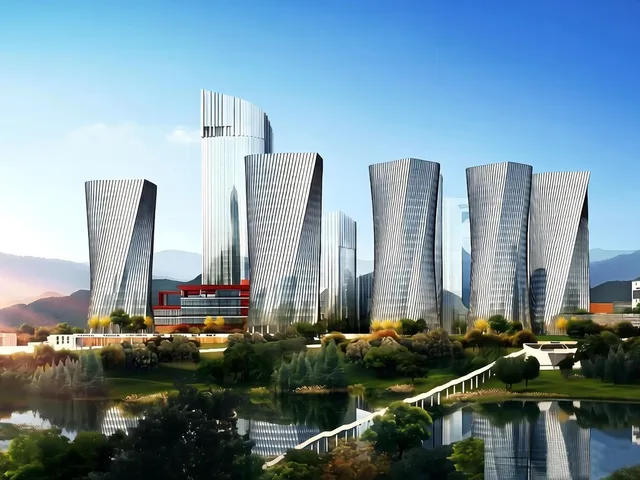
Shanghai Pudong Data Center Campus (Phase 1)
Envelope system for a 30MW hyperscale data center campus in Shanghai's Lingang New Area. Key challenges included hot-humid climate performance (designing for PUE 1.25 target), typhoon wind loads (design gust 65 m/s), and multi-phase expansion support. DC-Thermal Shield system with triple glazing (U-value 0.85 W/m²K) and extensive louvered penetrations for 180 MW total campus cooling capacity.
- U-value 0.85 W/m²K triple glazing in hot-humid climate
- 12,000 m² of custom louvered panels for HVAC intake/exhaust
- Modular grid aligned to 2.4m × 6m data center module dimensions
- Anti-ram K12 barrier integrated at ground level with aesthetic cladding
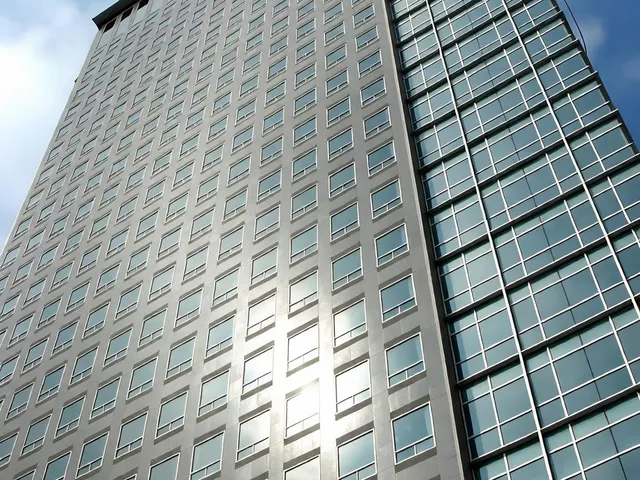
Beijing Financial District Colocation Facility
High-security facade for a Tier III financial services colocation data center in Beijing CBD. DC-Security system with UL 752 Level 4 ballistic glazing for admin areas, SGP-laminated forced-entry resistant glazing for all public-facing surfaces, and integrated CCTV/sensor mounting infrastructure. Cold climate performance with quad-glazing (U-value 0.55 W/m²K).
- Quad-glazing achieving U-value 0.55 W/m²K in cold climate
- UL 752 Level 4 ballistic glazing for admin and security areas
- Integrated PIDS (Perimeter Intrusion Detection System) coordination
- Fire-rated dampers at all 127 facade penetrations per NFPA 90A
View all data center-related projects in our project portfolio or request a data center facade consultation.
What Data Center Clients Say
"The thermal performance of Hanart's facade system directly contributed to our PUE 1.23 achievement in Shanghai's hot-humid climate — a result we hadn't thought possible without full immersion cooling. Their modular design meant our Phase 2 expansion required zero envelope rework, saving us 8 weeks on the construction schedule and approximately ¥4.2M in coordination costs."
Data Center Facade FAQ
What U-value should I target for my data center facade?
For data centers, we recommend U-values of 0.6–0.9 W/m²K for opaque wall areas and 0.8–1.2 W/m²K for glazing areas. In extreme climates (hot-humid or very cold), quad-glazing with VIP insulation can achieve U-values as low as 0.5 W/m²K. The optimal target depends on climate zone, facility size, cooling architecture (air-cooled vs. liquid-cooled), and PUE targets. We provide EnergyPlus modeling to determine the cost-optimal U-value for each project.
How do your facades support future data center expansion?
Our DC-Modular system uses a standardized panel grid (typically 600mm or 1200mm modules) that aligns with common data center rack and aisle dimensions. Future HVAC penetrations, electrical room expansion, and additional intake/exhaust pathways can be pre-engineered with removable infill panels. The structural system is designed for independent panel replacement without load redistribution, allowing single-panel replacement in under 2 hours.
What security ratings do you offer for data center applications?
We provide a full spectrum of physical security integration: anti-ram barriers (K12/M50 rated) at ground level; UL 752 Level 3–8 ballistic glazing for admin/security areas; forced-entry resistant glazing (ASTM F588) with SGP interlayers; blast-resistant design per ASTM F1642; and integrated mounting infrastructure for CCTV, PIDS, and access control systems. All security features are coordinated with the client's security consultant and validated against ANSI/TIA-942 requirements.
How do you handle data center facade penetrations for cooling?
Data center cooling requires extensive facade penetrations for air intake, exhaust, and emergency generator ventilation. We engineer custom louvered panels with AMCA 550/540 Class A weather ratings, integrated bird/insect screens, and blast dampers where required. All penetrations are thermally broken and sealed with fire-rated dampers per NFPA 90A. Filtration racks (G4–F7) can be pre-integrated behind louvers. We coordinate all penetrations with the MEP engineer to ensure airflow targets are met without compromising envelope integrity.
Can you provide PUE modeling with different facade specifications?
Yes — we provide EnergyPlus/DesignBuilder thermal modeling calibrated to local weather data (TMY3 or equivalent). Our modeling includes hourly envelope heat gain/loss, peak cooling load impact, and annual energy cost analysis. We typically model 3–5 facade specification scenarios (standard commercial, high-performance, ultra-high-performance) to identify the optimal investment point for each climate zone and facility size. The modeling output includes estimated PUE impact, payback period, and 10-year NPV analysis.
Get a Data Center Facade Consultation
Discuss your mission-critical facility project with our data center envelope specialists. We provide thermal modeling, security design, modular expansion planning, and construction phasing support.