Aluminum Facade & Curtain Wall Supplier Across Bahrain & Oman

Desert glass follows desert discipline. From the UAE office, Hanart coordinates Middle East curtain wall projects engineered for solar radiation, wind-borne sand and 50°C temperature swings — including solar-control glazing for Kuwait's Asian Olympic Council headquarters.

Market Overview

A Region Where the Envelope Works Hardest

The Gulf states build in one of the harshest climates for facades on the planet. The building envelope must reject solar heat gain, survive wind-borne sand abrasion, accommodate extreme diurnal temperature movement and still be installable in weather windows that can be brutally short in summer. Hanart's Middle East program is coordinated from the United Arab Emirates office, which manages client relations, local code coordination and logistics while the Shanghai engineering center handles system design and fabrication.

This split is practical, not cosmetic: the face the owner talks to is in their time zone and understands local procurement practice, while the engineering and manufacturing capacity is where it can be quality-controlled. The result is a single contract covering design, fabrication, export and supervised installation — the consolidation that Gulf owners increasingly demand to avoid interface disputes between separate suppliers.

Project Evidence

Kuwait's Asian Olympic Council Headquarters

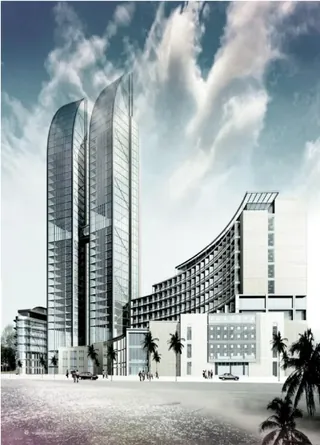
Asian Olympic Council Headquarters Kuwait exterior

Solar-control glazing for a desert headquarters

The Asian Olympic Council headquarters in Kuwait is a working case of how Hanart tunes a facade for Gulf conditions: glazing specified for solar control, shading coordination with the building massing, and sealant systems selected for sand and UV exposure. The project file documents the engineering rationale behind each choice.

Read the Asian Olympic Council project file →

Desert Climate Engineering

Designing for Sun, Sand and 50°C

Four engineering disciplines that change when the project is in the desert.

Climate DriverWhat It Does to the FacadeHanart's Engineering Response
Intense solar radiationRaises cooling load and internal heat gain through glazingSolar-control coatings, shading coordination and performance modeling to meet SHGC and U-value targets
Wind-borne sandAbrasions on coatings; fouling of drainage and gasketsSealed joint layouts, protected drainage paths and gasket materials rated for sand exposure
50°C surface temperaturesThermal expansion and differential movement between materialsMovement calculations and expansion joints sized for the full Gulf temperature range
Short dry installation windowsSealants and adhesives have strict application temperature rangesInstallation scheduling around no-rain windows, with material handling plans for summer heat

These four disciplines are summarized here; the engineering depth lives on the climate-engineering pages and in each project's technical file. Owners and consultants are welcome to request the calculation notes behind any system proposal.

Local Coordination

On-the-Ground Support From the UAE Office

The UAE office handles the coordination that makes cross-border delivery work: review of local authority requirements, engagement with consultants and contractors, freight forwarding through Gulf ports, and site interface management during installation. From Shanghai, the same project manager controls fabrication, inspection, packing and shipping documentation, so the owner tracks one chain rather than several vendors.

For energy-efficiency programs common in Gulf projects, the office coordinates with the climate engineering team on glazing selection, shading and building-integrated strategies that satisfy both performance targets and authority expectations.

Country Profiles

Gulf Markets, Market by Market

The Middle East is not one market. Four country profiles break out the region's largest programs with project evidence, code notes and logistics routes.

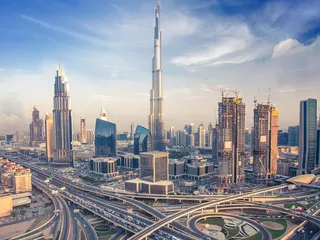
High-rise skyline of a Middle Eastern city
Country Profile

Saudi Arabia

Vision 2030's giga-projects — NEOM, Red Sea Project, Qiddiya, Dirigate Gate — demand facades that survive sand abrasion and 50°C summers while meeting SBC codes and GCC specification practice.

Explore the Saudi market →
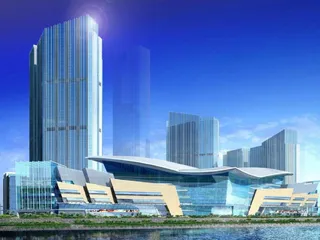
Waterfront complex with a sweeping curved roof below high-rise towers
Country Profile

United Arab Emirates

The home base of Hanart's Middle East office. Dubai and Abu Dhabi's super-tall and mixed-use programs run on marine-grade details, double-skin ventilated facades and point-supported atrium glazing.

Explore the UAE market →
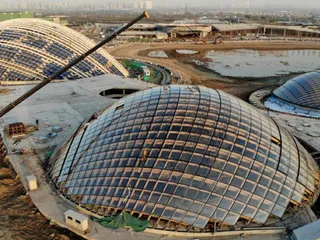
Aerial view of large glass domes on open ground
Country Profile

Qatar

Qatar's 2022 World Cup legacy and National Vision 2030 keep Doha building: towers, malls, stadium precincts and metro-station envelopes engineered for desert heat, dust and 50°C temperature swings.

Explore the Qatar market →
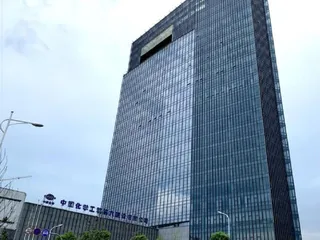
Grid-glass office tower seen from the street below
Country Profile

Kuwait

Home of Hanart's Asian Olympic Council headquarters reference — solar-control glazing, sand and UV-resistant seals and GCC-aligned engineering for Kuwait City towers and estates.

Explore the Kuwait market →

Have a Gulf project in the pipeline?

Send the brief to the UAE-coordinated team — a feasibility response lands in your inbox within 24 hours.