
Glass Reflectance & Light Pollution: Designing Considerate Facades
A glass facade that glares at its neighbours is a design failure, not a technical quirk. This article explains how glazing ratio, glass reflectance and geometry interact to create — or prevent — light pollution in dense urban districts, using the Shanghai Tower's landmark study as a worked example.
Published 9 October 2026 — Hanart Facade Engineering Team
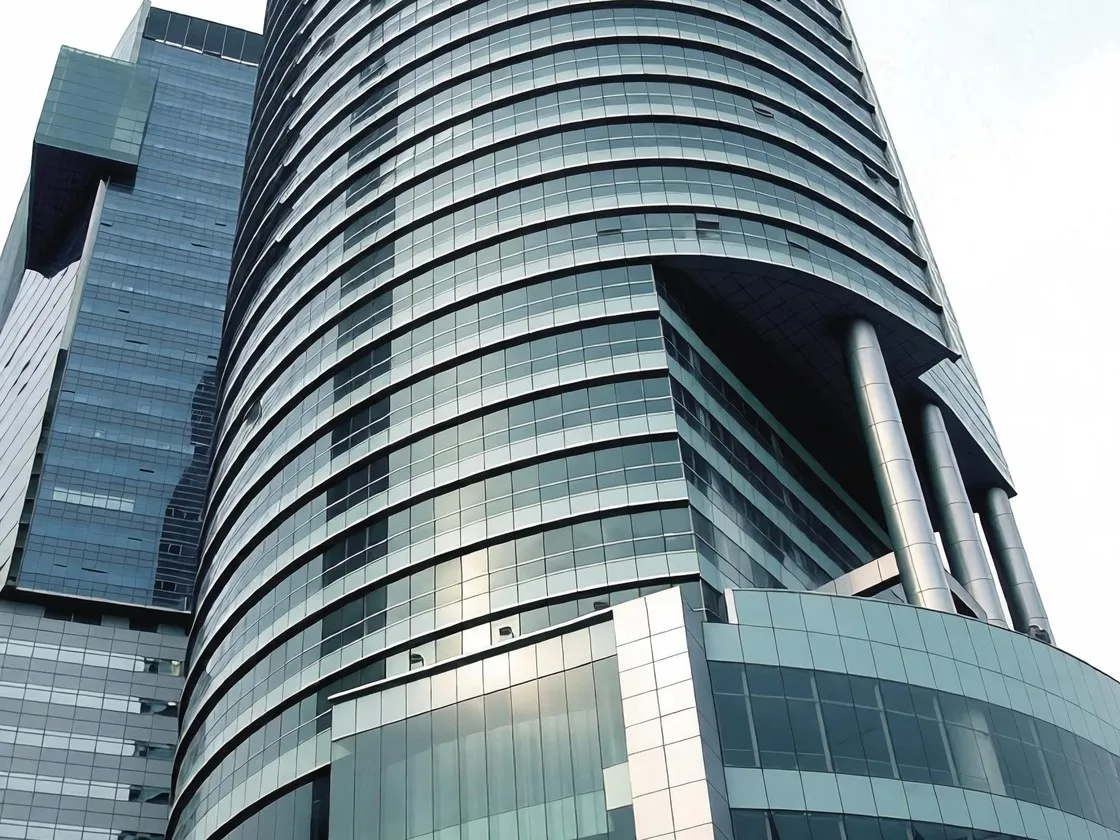
Light pollution control starts in the glass specification: coatings are engineered to block solar heat while keeping visible reflectance under the 15% urban limit.
What Light Pollution From Glass Actually Is
In dense city districts, light pollution from curtain walls means the harmful impact of glass reflectance on surrounding residential, civic and public buildings: glare into homes and offices, thermal and visual discomfort on the street, and energy wasted by reflected light. China's urban planning practice has formalised the issue in a direct way: the ratio of glass on a building facade may not exceed 70%, and the glass must have a reflectance out of no more than 15%. These two numbers — glazing ratio and reflectance — have become the de facto design contract for any facade in a regulated Chinese city, and increasingly appear as tender conditions in other Asian markets.
The physics behind the rule is straightforward. Modern glass reflects 8–15% of visible light as a bare minimum, and coated low-E glass can reflect far more in specific bands depending on the coating chemistry. When a facade is 70–90% glass and tilted toward the sun, the building becomes a mirror of significant area: at certain hours it can throw direct sun beams into a neighbouring tower hundreds of metres away. The Shanghai Tower project put the issue in perspective — its light pollution study became "the single most impactful variable in the overall exterior wall concept design and glass selection" — and the numbers it worked to are the same 70% / 15% limits now seen across Chinese regulations.
Glazing Ratio: The First Lever
The exterior-wall-to-glass ratio is the most visible control. Keeping glass below 70% of the wall area directly caps the reflective surface available, but it collides with the architectural desire for transparency and with the economics of prime office space. The Shanghai Tower's Exterior Curtain Wall A reached a glass ratio of about 87% including spandrel area — far above the 70% planning limit — while the Interior Curtain Wall B sat at about 60%. The resolution was not to cut glass but to prove, with a third-party light pollution study, that the specific reflectance, geometry and treatment of the glass kept the impact within acceptable bounds.
The engineering takeaway is that glazing ratio is a starting constraint, not a verdict. Spandrel panels with opaque frit or metal backing contribute to the ratio but do not reflect like vision glass; deeply recessed or shaded glass behaves differently from flush glass; and orientation matters — an east-facing tower in a morning commute district has a different glare liability than a north-facing equivalent. A responsible facade engineer quantifies these, zone by zone, rather than treating the ratio as a single binary pass/fail.
Reflectance Limits and the Coating Balance
Reflectance out at 15% or less is today achievable with mainstream glass products — but never for free. Visible light reflectance trades against two competing goals: solar heat gain control (lower SHGC usually means higher reflectance) and daylight transmission (higher VLT usually means lower reflectance). A facade that chases 12% reflectance with a strong solar coating can end up darkening the interior and raising lighting loads, while a coating tuned purely for daylight may violate the reflectance cap.
Practical specifications therefore fix the envelope of acceptable glass first — VLT range, SHGC range, reflectance ceiling — and then evaluate coatings inside that envelope. The Shanghai Tower selected an exterior glass with a minimal visible light reflectance of about 12%, at the cost of accepting a shading coefficient in the 0.4–0.5 band, a range that balances solar load against the double-skin ventilation strategy. Low reflectance and solar control were both achieved, but only because the performance targets were set as a multi-axis budget, not a single number. For the full logic of glass selection — coatings, IGUs, tints — our curtain wall glass selection guide walks through the specification process in depth.
Geometry: The Most Underrated Reflectance Control
Reflectance numbers on a datasheet are measured at normal incidence — light hitting the glass head-on. Real buildings face the sun at all angles of the day, and here geometry dominates the physics. Simply put, glass perpendicular to the ground reflects less toward neighbours than glass angled toward the sun: a vertical facade throws light horizontally at other buildings; an inclined one can throw it down into streets or up into apartments with different consequences.
The Shanghai Tower's facade is twisted and tapered, with the largest outward angle about 9 degrees. That small angle changed the reflection geometry enough to make the "staggered" panel scheme measurably better than the "smooth" scheme in the Ecotect sunlight/reflectance models, and the staggered system became the recommended and ultimately built design. The lesson generalises: on any project with sloped, faceted or curved glazing, the light pollution analysis must be done on the actual geometry, not on a datasheet value — a curved surface can focus or scatter reflected light in ways a flat wall never does.
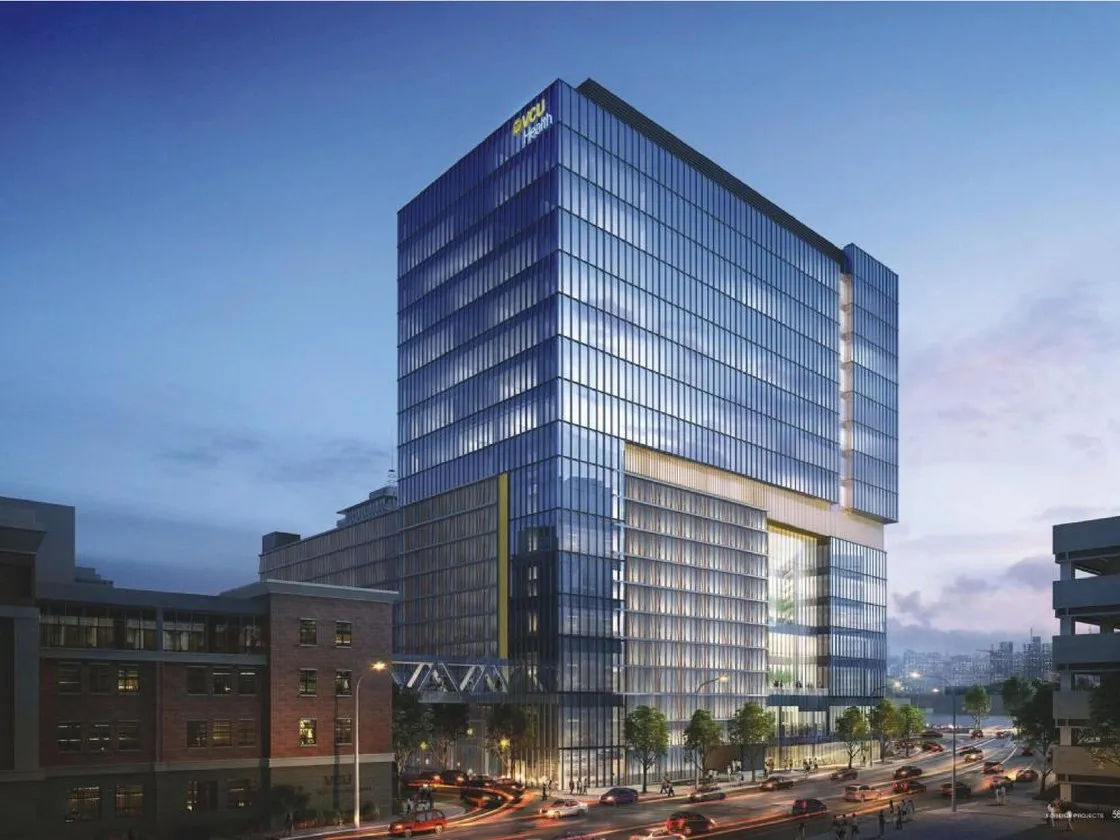
Frit patterns and external fins do double duty in dense districts: they cut solar gain and glare while lowering the perceived reflectance of a large glazed surface.
Frit, Shading and Secondary Mitigation
When reflectance and geometry cannot fully solve the problem, three secondary tools close the gap. First, fritted glass: ceramic frit patterns printed on the glass surface diffuse and absorb part of the incident light, lowering effective reflectance and softening glare at the same time. Frit is a design instrument as much as a performance device — dot, line and custom patterns are all viable, and the coverage ratio is tuned per zone. Second, external shading: horizontal projections acting as exterior fin shades — exactly the strategy used on the Shanghai Tower's atria, where fins plus frit reduce glare and cut solar heat. Third, spandrel treatment: opaque or metal-backed spandrel panels that read as glass in elevation but reflect far less than vision glass.
These are not last-minute add-ons; they should be fixed in the performance budget just like thermal values. A typical urban tower specification will carry: maximum 15% reflectance, glazing ratio plan per elevation, frit coverage schedule for glare zones, and fin geometry derived from solar studies. When all four are aligned, the facade meets the letter and the intent of light pollution rules — and earns its planning approval without redesign.
Frequently Asked Questions
What is the legal limit for glass reflectance on buildings?
In Chinese urban planning practice, the commonly enforced limits are a glass ratio of no more than 70% of the wall area and glass reflectance out of no more than 15%; some districts impose stricter local standards. Always confirm the governing planning code for your site, because the limits are local rather than national in enforcement detail.
Can low-E glass have low reflectance?
Yes. Low-E coatings control the infrared (heat) spectrum; visible reflectance is a separate axis controlled by the coating position, substrate and tint. Modern double-silver and triple-silver low-E coatings can deliver visible reflectance around 10–14% while keeping SHGC in the 0.25–0.40 range, provided the specification is evaluated as a multi-axis budget rather than a single datasheet number.
Does a light pollution study have to be done by a third party?
For major projects it usually should be. A third-party study adds independent evidence to the planning approval file and, as the Shanghai Tower demonstrated, drives real design decisions such as panel geometry and glass selection. The study typically covers a surrounding radius of several kilometres and models reflection at different sun angles and seasons.
How can I reduce glare without reducing glass area?
Specify low-reflectance coated glass, add ceramic frit patterns on vision and spandrel zones, introduce external fins or recessed glazing, and orient the layout so the most reflective glass faces away from sensitive neighbours. Geometry work — staggering panels, raking glass — also changes the reflection path without touching the glazed area.
Design Within the Reflectance Budget
Send your drawings and local planning limits. Hanart's engineers will propose glazing ratios, glass coatings and frit schedules that meet the 15% reflectance rule — free, within 48 hours.
You may also like:
Curtain Wall Glass Selection Guide