Sustainability with measured results, not green slogans

A facade is not “green” because of its material palette — it is green because of measurable performance: lower heat transfer, controlled solar gain, airtight detailing and verifiable manufacturing processes, backed by an ISO 14001 environmental management system.

Energy-Efficient Envelope Engineering

Four levers we specify, and what each one measurably does

Low-E insulating glazing

Low-emissivity coatings are specified by position within the insulated glass unit, unit type and project climate. The result is transparent glazing that admits daylight while controlling the heat-transfer and solar-gain values that drive HVAC load — performance verified on the datasheet, not on a brochure page.

Thermal-break frames

Aluminum frame systems with thermal-break inserts interrupt the conductive path between interior and exterior. On cold-climate projects such as Grand Plaza in Ulaanbaatar, this measure is what controls both energy loss and the condensation risk that damages interiors.

Airtight joint detailing

Uncontrolled air leakage is a silent energy loss that no glazing unit can compensate for. Hanart designs and verifies airtightness of the assembled facade per GB/T 21086 classification, and the factory water-spray testing of every unit closes the circle between design intent and installed reality.

Lightweight efficient design

Every kilogram of aluminum, glass and steel in the envelope embeds manufacturing and transport energy. Value-engineered section design and unitized fabrication reduce material use without reducing structural capacity — an embodied-energy saving that is part of the engineering, not a separate program.

Credentials

Verified Credentials — Not Claims

ISO

ISO 9001

Quality management system certified for design, fabrication and installation processes.

ISO

ISO 14001

Environmental management system governing waste, energy and compliance tracking.

ISO

ISO 45001

Occupational health and safety management for factory and site operations.

I

Curtain Wall Contracting Grade I

Highest-tier national qualification for curtain wall engineering and contracting.

A

Façade Design Class A

Top-level design qualification for building curtain wall and façade systems.

O

Overseas Contracting Qualification (2009)

Authorized for international project contracting since 2009.

Six National Luban Prizes

China's highest construction quality award

Commitments

What We Measure — And What We Don't Claim

Recyclable Materials

Aluminum, glass and steel are specified for end-of-life recyclability. Factory offcuts are segregated and returned to the supply chain.

Energy Performance

U-value, SHGC and air-leakage targets are set per project climate zone and verified against the standard cited in the specification.

Lifecycle Thinking

Value-engineered sections reduce embodied energy. Unitized fabrication cuts transport trips and on-site waste compared to stick-built methods.

We do not claim carbon neutrality or net-zero status. We do not label products with unverified sustainability claims. What we report are process facts — material consumption, waste segregation, energy use and test results — that can be audited against ISO 14001 and the standards referenced in each project specification.

Documentation

Sustainability Documentation

ISO 14001 Certificate

Environmental management system certificate — available on request for tender and due-diligence review.

Status: Available

Product Environmental Declaration

Third-party verified environmental data for system components — request for project-specific versions.

Status: Request

Annual Sustainability Summary

Planned annual summary of environmental metrics, waste targets and improvement actions — under development.

Status: In Development

Request Documentation

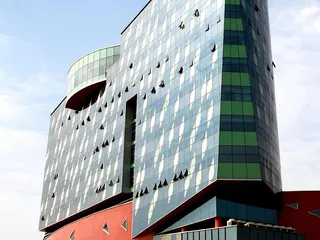
Glass-clad block topped by a metal roof structure

Energy performance in large-span metal roofing

Roofs are the highest solar-exposure surface of most buildings, and metal roofing systems carry their own thermal responsibilities. Hanart's large-span roofs — from the Tianjin Airbus assembly hall to the National Indoor Stadium — pair the standing-seam weatherproofing layer with continuous insulation and vapor-control detailing, so the thermal envelope is continuous across wall and roof rather than interrupted at the parapet.

For buildings where acoustic performance matters (assembly halls, stadiums), roof constructions can combine the thermal layer with acoustic absorption in the same build-up. The engineering point is the same: one roof build-up, several verified functions — weatherproofing, insulation, acoustics — delivered as an integrated system instead of layers added by different trades.

  • Continuous insulation across the roof plane
  • Vapor control and airtightness at junctions
  • Optional acoustic layer integration for venue roofs
Lifecycle Thinking

Why durability is the first sustainability metric

The most sustainable facade is the one that does not need replacement. Every panel removed from a building after 15 years represents embodied carbon wasted: the aluminum extrusion, the glass manufacturing, the transport, the installation labor, and the disposal. Our engineering targets 25-year service life as a baseline, and the evidence is in the installed portfolio.

The National Indoor Stadium (2008) and Tianjin Airbus Assembly Line (2009) have both passed 15 years in service with their original envelopes intact — no sealant failures, no panel replacements, no water ingress. The Shanghai Synchrotron (2009) operates a precision research environment where envelope degradation would show immediately in instrument drift; it has not. These are not marketing claims — they are buildings you can visit and inspect.

When we design a facade, we specify sealants, gaskets and coatings for the climate they will face, not for the climate they were manufactured in. A silicone sealant rated for Shanghai's humidity and temperature cycling may not survive Kuwait's UV and sand abrasion. Material selection is climate-matched, and the match is documented in the project file.

Verified Performance

Test standards, not promises

Every performance claim on this site is tied to a test standard, a project reference, or both.

Performance Domain Test Standard Project Evidence
Thermal transmittance (U-value) ISO 10211, ISO 10077 Shanghai Synchrotron — stability-critical envelope
Air permeability EN 12152, ASTM E283 All unitized projects — tested at factory before shipment
Water tightness EN 12154, ASTM E331 Taiyuan Airport — zero leakage under dynamic pressure
Wind resistance EN 12179, ASTM E330 166 Perry Street, New York — high-rise wind load design
Acoustic performance ISO 140-3, ASTM E90 Zhejiang Art Museum — sound isolation for gallery spaces
Seismic performance GB 50011, local codes Taiyuan Airport — high seismic zone terminal design

Test reports are available under NDA for qualified projects. Request documentation with your project inquiry.

ISO 14001: environmental management as process

Hanart operates an environmental management system certified to ISO 14001 (aligned to GB/T 24001). In practice that means documented environmental procedures, defined responsibilities and internal audit — covering waste classification and disposal at both factory and site, energy and material consumption review, and compliance tracking with local environmental regulations on every project.

Lower material waste by design

The single largest waste lever in a facade project is fabrication efficiency. Unitized, factory-based production cuts profiles and glazing with CNC programs optimized for nesting, recycles offcuts and glass cullet as part of the process, and eliminates most of the on-site cutting waste that stick-built systems generate. Factory production also concentrates packaging, which is then organized for recycling at delivery. These are process facts, not targets — they are measurable and auditable in the factory.

Facade with a white diamond grid and a green glazed band
The Honest Boundary

What we will not claim

Hanart does not claim to be a “net-zero” or “carbon-neutral” facade company, and we do not label our products with carbon or sustainability claims that have not been verified by third-party assessment. Energy performance of glass is certified by the glass manufacturer against the standards applied to that product; our own contribution is the engineering that selects, combines and installs it, plus the ISO 14001-managed processes that govern how we manufacture and build.

We state this boundary deliberately because unverified green claims are precisely what serious evaluation teams distrust. For every energy measure on this page, we can show the standard it is specified against, the verification method, or the process that controls it — and that is the definition of sustainability reporting an engineer can defend in a meeting.

“Green is a property of measured performance. We prefer to show the measurement.”

Energy-efficient facades expertise →   ISO 14001 certification details →

Specify an envelope that performs, and can prove it.

Send us your climate data and performance targets — we will respond with a glazing and system recommendation backed by the standards and test methods behind it.