
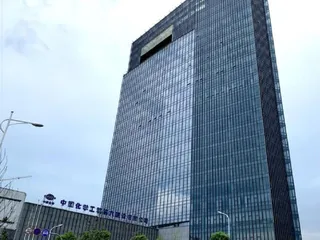
Project
Olympic Council of Asia HQ
The portfolio's heat extreme — envelope engineering proven from -40°C to 50°C.
Read →A commercial complex in the world's coldest capital city, wrapped in an envelope built for -40°C — where a facade's smallest thermal detail decides whether a building works at all.
Ulaanbaatar is the coldest capital on earth — a city where winter temperatures reach -40°C, where the heating season runs for much of the year, and where the energy cost of a poorly insulated building is not a line item but a structural problem for its operator. Grand Plaza, a commercial complex in the city, demanded an envelope that behaves very differently from anything a temperate-climate default would deliver: a continuous, high-performance thermal boundary where the cold is kept out at the facade rather than fought at the radiator.
Hanart's scope brought full cold-climate envelope engineering to the project: thermal-break curtain wall systems designed so the framing itself conducts as little cold as physically achievable, sealed construction engineered for the extreme temperature cycling of the Mongolian Year — from -40°C winter nights to significant summer warmth — and glazing and gaskets selected for performance and survival across that range. The facade delivered the commercial building's daylight and street presence while functioning as the thermal instrument the climate demands, delivered through Hanart's overseas organization and outbound-qualified international construction capability.
With the Kuwait headquarters, Grand Plaza brackets Hanart's climate record: facade engineering proven from 45–50°C desert summers to -40°C continental winters — the two extremes that represent most of the world's genuinely demanding climates. For developers in cold markets, it is the case that says envelope competence starts at the thermal break. Further detail sits in the mixed-use collection and the engineering capability.
-40°C changes every rule. At -40°C, materials behave differently: sealants stiffen, gaskets lose elasticity, condensation forms at temperatures no temperate building ever meets, and a thermal bridge that represents a comfort nuisance in Shanghai becomes a freezing, condensation-forming defect in Ulaanbaatar. The engineering challenge was to design an envelope where the entire system — framing, glazing, gaskets, drainage — is specified and detailed for the cold, not merely adjusted for it: materials rated for the temperature range, condensation surfaces eliminated by design, and the thermal-break performance of the framing made continuous through the assembly.
The seasonal swing is the second enemy. Mongolia's climate is not uniform cold; it swings across one of the largest seasonal ranges on earth. The envelope therefore had to accommodate not one temperature but a range of 80°C or more across the year — thermal movement engineered at every joint, expansion provision designed into long runs, and gasket and seal materials selected to survive the cycle without embrittlement or compression set. A facade designed for a stable climate fails in Ulaanbaatar not in its first winter but in its first summer-after-winter, when the accumulated cycling breaks what the cold alone could not.
Energy is a national condition. In a cold capital, the operating economics of the building are dominated by heating, and the envelope is the single largest variable an owner controls. A high-performance facade buys the complex reduced heating loads and better comfort for every year of its life; a marginal facade charges that cost back indefinitely. The Grand Plaza envelope was therefore engineered to a cold-climate building standard — high-performance thermal design at the glass and frame, controlled air tightness, and detailing that keeps the thermal boundary continuous — because in this climate, facade engineering and operating economics are the same subject.
The system decision anchored on one requirement: the facade had to be a continuous high-performance thermal boundary. Thermal-break curtain wall formed the core — framing engineered so the structural profile is thermally separated, the assembly detailed so insulation and break performance remain continuous across the full facade, and glazing units specified and positioned for the cold climate's ratio of daylight desire to heat loss. Sealed construction completed the barrier: gaskets and seals selected for extreme temperature range, air- and water-tightness engineered to a cold-climate standard where infiltration is measured in heating cost, and condensation management designed out of the system wherever the climate would otherwise find a weak point.
Movement engineering ran through the whole envelope: the seasonal range of more than 80°C demanded carefully designed expansion provision at every scale, from the frame system's long-run detailing to the glazing's bite and bedding. Fabrication and installation followed the documented discipline of Hanart's cold-climate delivery — materials and workmanship checked against the temperature-rated specification, installation sequenced so the weather barrier was closed through the project's own winters, and the completed envelope commissioned against the performance targets that a -40°C climate sets.
Delivered through Hanart's overseas operation, Grand Plaza stands as the company's cold-climate flagship — commercial envelope engineering for the coldest capital on earth, and the complement to the desert project in Kuwait. For developers, architects and authorities building in cold markets, the envelope standard demonstrated here is detailed in the mixed-use collection, and available directly in discussion with the international team.
| Parameter | Detail |
|---|---|
| Project | Grand Plaza, Ulaanbaatar — commercial complex, Mongolia |
| Envelope scope | Thermal-break curtain wall + sealed cold-climate construction |
| Climate baseline | -40°C winters; seasonal range exceeding 80°C across the year |
| Thermal strategy | Continuous high-performance thermal boundary; condensation designed out |
| Movement design | Expansion provision engineered for the full seasonal cycling range |
| Delivery channel | Hanart overseas organization; outbound-qualified international construction |
| Standards | ISO 9001 / 14001 / 45001 management systems; GB/T 21086 performance testing |
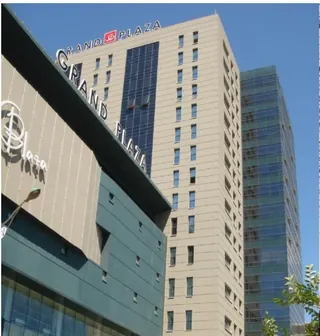
The thermal boundary holding -40°C outside and comfort inside.
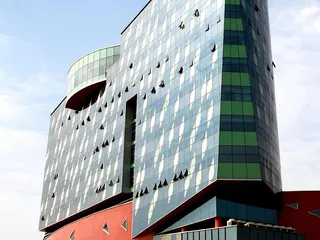
Thermally separated framing where the cold meets the building.
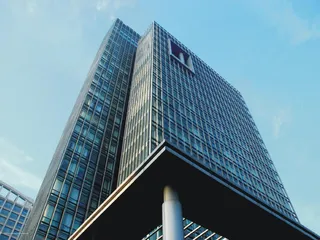
Daylight and street presence without surrendering the thermal line.
The portfolio's heat extreme — envelope engineering proven from -40°C to 50°C.
Read →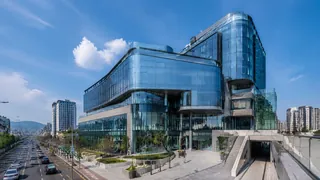
Commercial and hospitality envelope work across the portfolio.
Browse →
International delivery from seven overseas territories, climates included.
Explore →Request a similar quote — thermal-break envelope engineering where every detail decides the heating bill.