
Curtain Wall Design for Extreme Climates: Typhoon, Desert & Cold
A curtain wall that survives a Shanghai summer and a Dubai winter is not a compromise — it is a climate engineer's puzzle. Typhoon zones push wind and water loads; deserts attack with sand, dust and brutal thermal swing; polar and cold climates fight condensation, ice and embrittled sealants. This guide sets out the design responses Hanart applies across its international portfolio, region by region.
Published 9 October 2026 — Hanart Facade Engineering Team
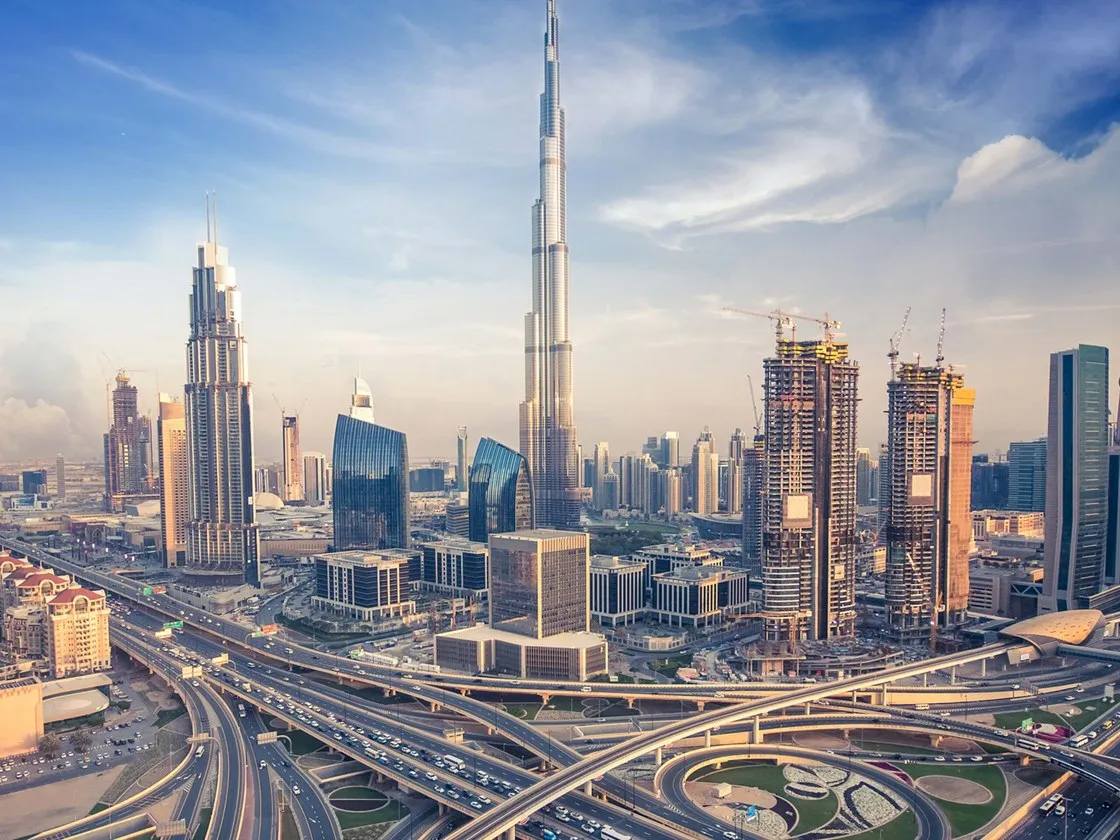
Desert facades must be engineered for thermal movement measured in centimetres — and for glass that ages under brutal UV.
One System, Many Climates: The Design Response Framework
Desert facades must be engineered for thermal movement measured in centimetres — and for glass that ages under brutal UV.
No single detail is 'the' extreme-climate answer, but the engineering response follows a fixed framework: identify the governing load or degradation mechanism, set the performance target from the local code, select the system components that survive the mechanism, and verify by test in conditions that represent the site. Hanart applies this framework across coast-typhoon towers, Middle East and North African desert projects, and cold-climate installations in Europe and Central Asia. The sections below translate each climate into concrete system decisions, cross-referencing the wind loading article, the weathertightness article and the regional project pages on this site.
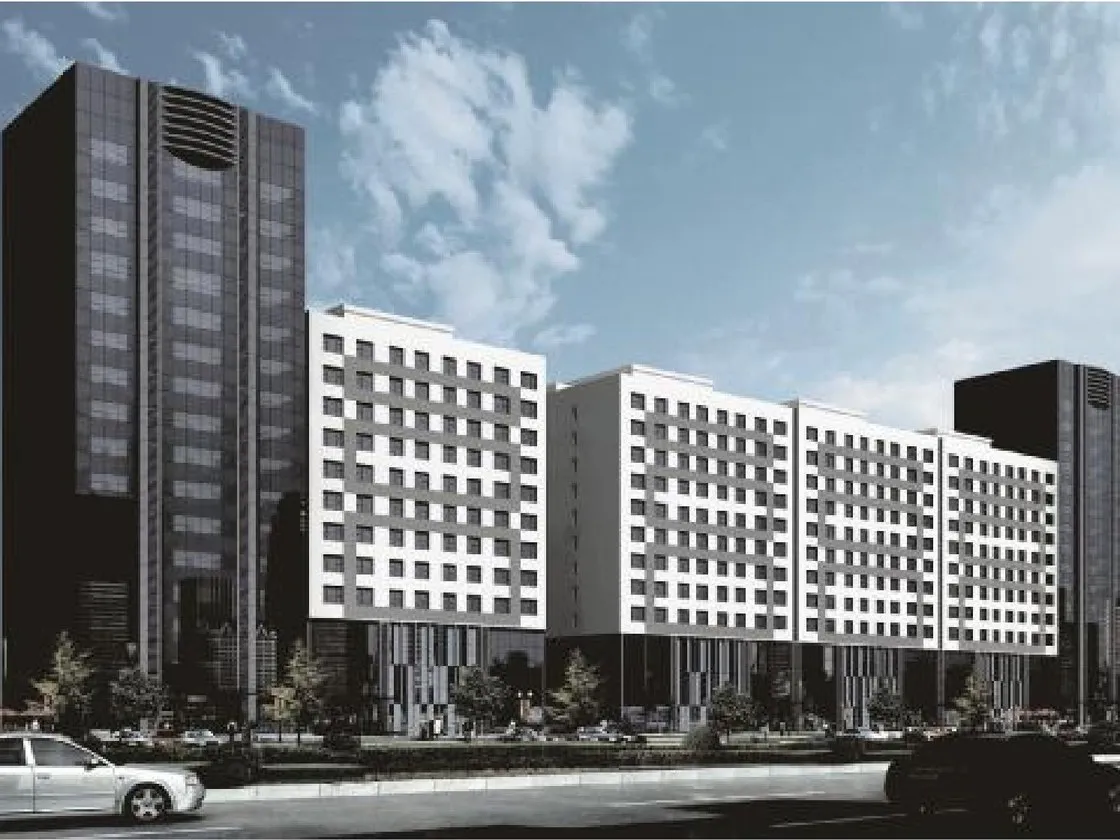
Cold-climate detailing turns the same system into a frost-resistant assembly: gaskets, sealants and condensation paths all change.
Typhoon and Hurricane Climates: Wind, Water and Debris
Cold-climate detailing turns the same system into a frost-resistant assembly: gaskets, sealants and condensation paths all change.
In typhoon zones (the China coast, the Philippines, the US hurricane belt, and increasingly the Gulf under storm events), the governing loads come from three mechanisms: extreme wind pressure, wind-driven rain, and airborne debris. The wind pressure is set by the national code for the site's basic wind speed — GB 50009 in China, ASCE 7 in the US, EN 1991-1-4 in Europe — but the facade engineer's job goes beyond the code baseline: pressure coefficients on corner zones, parapets and podium edges can double the design pressure, and the anchor design must transfer the local peak, not the area average. The design response is differential: corner and zone-specific members, anchors specified for the governing panel load, and deflection limited to preserve the weather seals under cycling.
Wind-driven rain is the second weapon: at typhoon wind speeds, water is driven sideways faster than the weep path can drain, so the weather line must be pressure-equalized and the test pressure must represent the site. Hanart specifies water penetration testing at storm-level differentials (beyond the standard 300 Pa class on exposed corners) and adds field testing after storm events during the defects period. The third mechanism, debris: hurricane codes (e.g. the Florida High-Velocity Hurricane Zone provisions) require impact testing of glazing and panels against wind-borne missiles — the laminated outboard pane is the standard response, with the laminate holding the pane after impact while the frame survives the missile load. The wind tunnel and structural test article on this site details how the load numbers are produced and verified.
Desert Climates: Sand, Dust, UV and Thermal Swing
Desert conditions do not attack a facade with dramatic loads; they attack with relentless abrasion and the widest thermal cycle any building experiences. Sand and dust storms abrade the coating of exposed frames, pit the glass surface and clog weeps; the design response is physical: recessed or protected gaskets, coated frames with the hard anodize or powder class verified for abrasion, upward-facing seals minimized, and weep geometry sized generously and shielded. Glass in desert buildings is typically double-glazed with a hard Low-E coating, and the interior faces need protection during sandstorms — but the biggest desert-specific decision is often the air quality of the double-skin cavity, not the glass itself.
Thermal swing is the quieter killer. A desert facade can see surface temperatures from -5 °C at night to 80 °C in the sun — a differential that produces thermal expansion in a 20-metre mullion of several millimetres and stresses every joint. The design response: movement joints placed at the coded intervals, gaskets and sealants selected for the movement class (high-movement silicones), thermal breaks sized for the real temperature gradient, and the framing detailed so that thermal bow does not open the weather line. The thermal performance guide on this site carries the U-value and condensation math; the desert difference is that the math runs in both directions — overheating drives solar control, while night-time cooling still demands condensation management (watertightness in extreme climates covers the storm side of the same story).
Cold and Polar Climates: Condensation, Ice and Embrittlement
Cold climates defeat facades through condensation, ice and material embrittlement. Condensation appears when the interior surface temperature of the frame or glass drops below the dew point — the design response is a warm-edge IGU, a thermally broken frame with the break placed correctly in the condensation plane, and a CRF (condensation resistance factor) verified in design and mock-up. The two-climate danger is the 'thermal bridge at the anchor': the aluminium bracket conducts cold straight to the steel, so the anchor design must include the insulating washer and the correct break geometry, or the building office floor frosts up at exactly the anchor columns.
Ice attacks the mechanics: snow accumulates on sloped glazing and parapet shoulders, icicles form at the drip edge and fall on pedestrians (the design response is the heated drip or the engineered drip position), and ice forms in the weep path and blocks drainage. The cold-climate weep solution is an oversized, vertical or shielded drain with an internal air gap that keeps the path open, plus secondary drainage redundancy. Materials change too: EPDM gaskets stiffen and lose compression at -20 °C, so cold-climate specs use low-temperature-rated gaskets and sealants with the movement and cold flexibility class verified down to the site minimum; and installation is restricted to the sealant manufacturer's temperature window, which in winter climates turns 'when we can install' into a scheduling science. Where condensation load is extreme — pools, ice rinks, greenhouses — the facade must also handle interior humidity with vapour control, and the thermal performance guide covers that calculation set.
The Code-to-Detail Bridge: Turning a Climate Class into a System
| Climate | Governing Load | Key Design Response | Verification |
|---|---|---|---|
| Typhoon / hurricane | Wind pressure, driven rain, debris | Zone-specific members, laminated outboard pane, pressure-equalized weather line | ASTM E330/E331, AAMA 501.1, missile impact test, field storm surveys |
| Desert | Sand abrasion, thermal swing, UV | Protected gaskets, hard coatings, movement joints, sized weeps | Coating abrasion class, thermal cycling simulation, dust-clogged weep test |
| Cold / polar | Condensation, ice, embrittlement | Thermally broken frames, warm-edge IGU, low-temp gaskets, heated drips | CRF calculation, dew point review, low-temp flexibility test, mock-up inspection |
| Coastal | Salt corrosion, wind-driven salt | Marine-grade fixings, sealed cavities, drainage of salt-laden water | Salt-spray test (ASTM B117), 15-year coastal reference review |
The table is the skeleton; the specification is the muscle. Every climate duty translates into a specification clause — the test standard, the class, the verification event — so that what was a climate story becomes a measurable contract item. Hanart's project teams in the Middle East, Europe and North America operate under exactly this framework, and each regional project page documents how the local code was translated into the delivered system.
Bringing the Climate Framework to Your Project
For a project in any climate, the engineering input is the same first product: a climate brief that converts the site's code, weather data and exposure into a performance requirement table — wind pressures by zone, water test pressures, thermal targets, material classes — before any system is selected. That brief is the document on which the whole facade gets priced and tested. Hanart issues the climate brief with its tender submissions and offers it as a standalone engineering service for owners comparing systems. Send your project location and drawings to bob@hanartfacade.com or call +86-21-5106 1751, and the team will return the climate brief for your site within 48 hours.
Frequently Asked Questions
What wind pressure should a curtain wall in a typhoon zone be designed for?
The governing code sets the basic design wind speed for the site (GB 50009, ASCE 7 or EN 1991-1-4), but corner and parapet pressure coefficients can double the local design pressure. The facade should be engineered zone-by-zone, with anchors verified for the governing panel load, not the area average.
How do desert sandstorms damage a curtain wall?
Sand and dust abrade frame coatings and pit glass, clog the weep and drainage paths, and drive grit into gaskets. The design response is protected gaskets, hard abrasion-rated coatings, generously sized shielded weeps, and interior protection during storm events.
Why do curtain walls in cold climates get condensation on the frame?
Condensation occurs when the interior frame surface drops below the dew point. It is caused by thermal bridging — typically at the anchor brackets — and cured by proper thermal break placement, warm-edge insulating glass units and a verified CRF in the design.
Can the same curtain wall system work in both hot and cold climates?
The same system family can, with climate-specific component choices: coating and glass for solar control, thermal break depth and warm-edge spacers for cold, low-temperature gaskets for winter sites, and joint spacing for thermal movement. The specification differs; the system logic stays the same.
What testing proves a facade is extreme-climate ready?
Wind and water testing at storm-level differentials (ASTM E330/E331, AAMA 501.1), missile impact testing for hurricane zones, salt-spray testing for coasts, low-temperature flexibility tests for gaskets in cold climates, and thermal cycling simulation for desert sites — each tied to the climate brief for the project.