
Aluminum Curtain Wall & Facade Supplier in Vietnam
Hanart supplies curtain wall systems to Vietnam — Ho Chi Minh City, Hanoi and Danang — engineered to TCVN wind provisions, including typhoon coastal zones, with Cat Lai and Haiphong delivery.
Facade engineering for Vietnam's typhoon belt
Vietnam's construction market is among the fastest-growing in Southeast Asia, led by Ho Chi Minh City, Hanoi and the emerging Danang / Quy Nhon coastal corridor. The climate demands serious structural engineering: typhoon winds on the central coast, monsoon rain, high humidity and intense solar gain.
Hanart engineers Vietnamese facades on the TCVN wind map, sizes impact-resistant glazing in typhoon zones, and tests watertightness to high differential pressure classes — the same discipline applied across its tropical portfolio.
Backed by a top-50 Chinese contractor, Hanart gives Vietnamese developers a single contract for engineering, fabrication, freight and erection supervision with local consultant coordination.
Design wind speeds per TCVN, impact-resistant glazing and tested watertightness in high-wind zones.
Low-SHGC coated glass cuts cooling load in HCMC's hot season.
Corrosion isolation and marine-grade details for coastal projects.
Unitized fabrication in parallel with structure works cuts overall program.
TCVN-aligned engineering and port logistics
Facade engineering follows TCVN wind load and structural provisions in force, verified with local consultants so the documentation satisfies Vietnamese authority review and construction supervision requirements.
Logistics route via Cat Lai (Ho Chi Minh City), Haiphong or Danang, with inland delivery to site. DDP including duty and clearance, or CIF/FOB per contract preference.
| Wind loads | TCVN 2737 provisions incl. typhoon coastal zones |
| Structural | Bracket and frame design per TCVN practice |
| Fire | Spandrel and glazing performance per approval |
| Glazing | Impact-resistant laminated / coated glass per zone |
Systems we deliver in Vietnam
Unitized curtain wall for high-rise commercial and residential towers, stick systems for landmark geometry, window wall for hotels, and point-supported glazing for atriums and lobbies.
Fabrication at the Shanghai plant with full seal testing; panels ship via Cat Lai or Haiphong packed and numbered. Programs run 10–16 months from design freeze to completion at Ho Chi Minh City sites.
As-built documentation, spares, manuals and a structured warranty complete the Vietnam package.
Sourcing a curtain wall supplier in Vietnam
Most Vietnam facade purchases start the same way: a technical brief, shortlisted suppliers, engineering review, mock-up, fabrication and site installation. Where the chain shortens — and the cost moves most — is keeping engineering and fabrication under one contract, which is how Ho Chi Minh City projects lock the approved price. Both happen at our Shanghai plant, so the price approved before fabrication is the price that holds for your Ho Chi Minh City project.
Engineering for Vietnam is prepared against TCVN 2737 provisions including typhoon coastal zones. The central engineering team finishes structural, thermal, acoustic and fire calculations under TCVN-aligned criteria, and licensed local consultants verify the package before fabrication is released.
Panels leave Shanghai with marine-grade packing, customs-classified documentation and numbered installation drawings, routed for Cat Lai. For Vietnam we typically ship through Cat Lai or Haiphong on DDP or CIF terms. Erection is carried out by locally permitted crews under Hanart supervision, with a site QA plan covering setting-out, sealant works and watertightness testing for Ho Chi Minh City conditions.
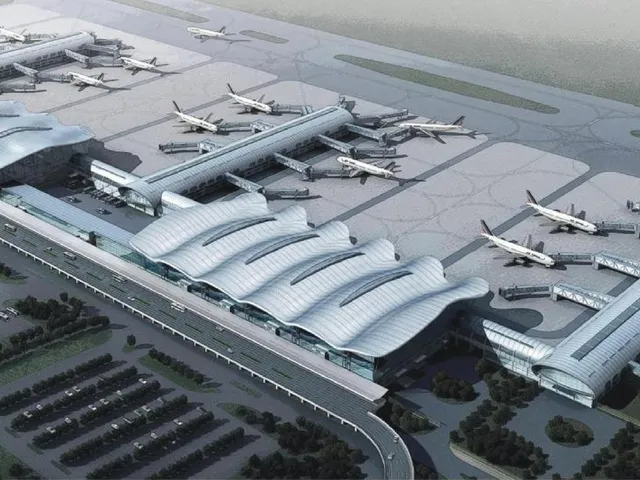
Typical briefs we price for Vietnam: airport and transport terminals, office and data-centre towers, hotels and mixed-use developments, retail and education estates.
Facade budgets, programmes and risk for Ho Chi Minh City towers
A realistic facade budget for a Vietnam high-rise splits roughly 6–10% engineering and testing, 55–70% materials and fabrication, 10–15% logistics, and 15–25% on-site labour. Unitized versus stick-built selection and the required performance-testing regime drive the mix — we price both early.
Cross-border facade supply puts three financial risks in front of Vietnamese developers: currency movement, duty changes and site-readiness sequencing. Hanart manages them with fixed-price engineering-to-install packages where possible, DDP terms via Cat Lai or Haiphong, and production sequenced to the installation order rather than one bulk shipment.
On site, tolerances, interfaces and weather windows carry the risk, with typhoon and heavy-rain seasons in play. QA covers setting-out, drainage, sealant and watertightness verification, and the complete documented record precedes handover to your team.
One Hanart contract end to end: what the package covers
One contract means one accountable counterpart for engineering, cost, quality and schedule. When something moves on site, your team talks to ours through one counterpart — not through a spread of suppliers.
- Engineering and local code verification for Vietnam
- Performance-tested mock-up before any fabrication
- Every panel seal-tested in full at the Shanghai plant
- Marine-grade packing, customs documents and sequenced delivery via Cat Lai or Haiphong
- Erection with local crews under Hanart supervision, plus a QA record
- Handover drawings, maintenance manual, spares and structured warranty
Vietnam facade questions, answered
Yes — supply, supply-and-erect and design-build packages across Vietnam, TCVN-aligned engineering and delivery via Cat Lai, Haiphong or Danang.
Design wind speeds follow the TCVN wind map, with impact-resistant glazing and high-class watertightness tested before fabrication.
DDP including import duty and clearance into Vietnam, or CIF/FOB. Duty and documentation are planned before shipping.
Yes — engineering documents are prepared with local consultant coordination for authority review.
From design freeze, a typical high-rise tower reaches facade completion in 10–16 months.
Evaluating partners in other countries? See Hanart in Thailand · Malaysia · Philippines · Indonesia.
Local verification and approvals for Vietnamese projects
Approval of imported facade systems is a project-specific process, so Hanart packages the evidence your consultants and authorities expect: TCVN 2737 provisions including typhoon zones calculations verified by a local engineer, custom-classified import documentation, and test certificates for the key performance classes. The same dossier is updated through revisions and issued in final form at handover, so the Ho Chi Minh City approval record is complete.
For tenders, the package is prepared in the format your procurement team requires and delivered as a fixed offer — typically six to twelve weeks from technical brief to priced proposal, including logistics through Cat Lai or Haiphong, DDP or CIF.
Plan a facade for your Vietnam project
Send your drawings and site location. You'll get a system recommendation engineered for Vietnamese wind, rain and energy code under TCVN — with logistics via Cat Lai or Haiphong and a programme estimate.