
International Curtain Wall Standards: How GB/T 21086, ASTM, EN and AAMA Compare
Export curtain wall projects routinely face a compliance maze. A single facade may need to satisfy China's GB/T 21086 for factory testing, AAMA 501 for US water-penetration validation, and EN 13830 plus CPR CE marking for European delivery — often simultaneously. Understanding how these standards differ in test philosophy, performance thresholds, and certification pathways is not a paperwork exercise; it is a design and procurement decision that shapes material selection, panel geometry, and project risk from day one.
Published 8 October 2026 — Hanart Facade Engineering Team
Why standards matter for export projects
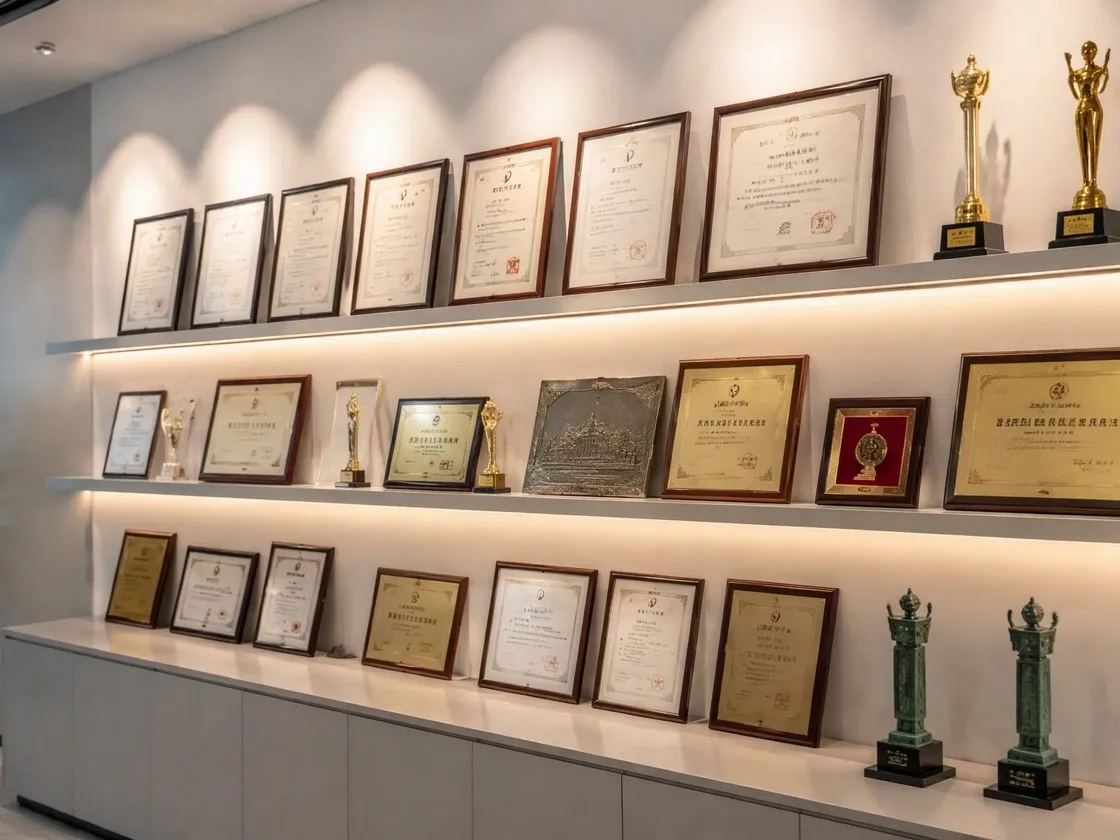
Every curtain wall standard is, at root, a contract between the designer, the tester, and the building inspector. When a project is domestic, one standard governs all three parties. When the project is exported, that single contract fractures into two or three parallel compliance tracks, each with different test protocols, different acceptance thresholds, and different third-party witnesses. The result is not merely administrative duplication. It is a technical challenge that affects aluminium alloy grade selection, glass certification, silicone sealant specification, and even the geometry of drainage channels.
The most common multi-standard scenario involves a Chinese fabricator supplying a project in the Middle East that is financed by European banks and insured by a US underwriter. In this case, the facade may need GB/T 21086 factory certification for Chinese export customs, AAMA 501.1 dynamic water testing for the Gulf client's consultant, and EN 13830 CE marking because the project loan covenants require European product compliance. Designing for one standard and hoping the others will accept equivalency is a strategy that fails more often than it succeeds. Test method differences are real, and equivalency letters from third-party laboratories are expensive, time-consuming, and sometimes rejected by the local authority having jurisdiction.
Certification互认 is limited. There is no automatic acceptance of a Chinese GB/T 21086 test report by a US building department, nor does a US AAMA certification automatically satisfy European CPR requirements. Each jurisdiction treats its own test methods as normative and foreign methods as informative at best. The only reliable path is to design for the most stringent standard from the outset and supplement with jurisdiction-specific testing where required. This article compares the three major standard families — Chinese GB, US AAMA/ASTM/IBC, and European EN/ETAG/CPR — so that procurement and engineering teams can make informed decisions before the first mock-up is built.
China: GB/T 21086 and the test hierarchy
China's primary curtain wall standard, GB/T 21086-2007 Curtain Wall for Building, establishes a comprehensive test hierarchy that covers air permeability, water tightness, wind load resistance, and in-plane deformation. The standard classifies curtain walls into four grades for each performance metric, with Grade 1 being the most stringent. For example, air permeability under 10 pascals pressure differential is rated from 0.5 to 4.0 cubic metres per hour per square metre, with Grade 1 requiring not more than 0.5. Water tightness is tested by the static spray-bar method at fixed pressure increments, with Grade 5 representing the highest classification at 2,000 pascals or above.
Wind load resistance testing under GB/T 21086 references GB 50009 Load Code for the Design of Building Structures, which defines the basic wind pressure calculation based on 50-year return period wind speed, terrain category, and building shape coefficient. The standard specifies a safety factor of 1.4 for wind load on curtain wall components, meaning the design wind load is multiplied by 1.4 before being applied to the test specimen. This is less conservative than the US ASD approach but comparable to European partial safety factor methodology. GB 50429 Code for Design of Aluminium Alloy Structures governs the allowable stresses for aluminium extrusions, with 6063-T6 alloy having a design strength of 150 megapascals under this code.
Energy performance is addressed through GB 50189 Design Standard for Energy Efficiency of Public Buildings, which sets maximum U-value and solar heat gain coefficient (SHGC) limits by climate zone. Northern Chinese cities such as Beijing require U-values below 1.8 watts per square metre kelvin for curtain walls, while southern cities such as Shanghai target 2.0 to 2.3 depending on orientation. Fire safety is governed by GB 50016 Code for Fire Protection Design of Buildings, which classifies building materials from A (non-combustible) to F (highly flammable) and requires fire-resistant curtain wall systems to maintain integrity for specified durations, typically one to two hours for high-rise buildings.
United States: AAMA, ASTM and IBC
The US curtain wall standards landscape is fragmented across multiple organisations, each with a distinct role. AAMA (American Architectural Manufacturers Association) publishes the 501 series of performance test methods: 501.1 for water penetration under dynamic pressure, 501.2 for water spray testing of field-installed windows and curtain walls, 501.3 for thermal cycling, 501.4 for static water penetration, 501.5 for thermal performance, 501.6 for seismic drift, and 501.7 for dynamic water penetration of sloped glazing. The 501 series is widely referenced in project specifications and is often treated as the de facto acceptance standard for commercial curtain walls in North America.
ASTM International provides the underlying test methods that AAMA references. ASTM E283 measures air leakage rate through the specimen at a pressure differential of 75 pascals (1.57 pounds per square foot), which is significantly higher than China's 10 pascal baseline. ASTM E330 applies structural wind load to the specimen in a static pressure chamber, while ASTM E331 uses a static spray-bar water penetration test. The key difference from GB/T 21086 is that US static water testing uses a calibrated spray rate of 3.4 litres per minute per square metre at specified pressure differentials, whereas Chinese testing uses a fixed spray rate with incremental pressure steps. The specimen size requirements also differ: ASTM E330 typically requires a minimum 4.2 by 7.3 metre specimen for full-scale curtain wall testing, while GB/T 21086 accepts smaller specimens for component-level testing.
Thermal performance in the US is regulated through the NFRC (National Fenestration Rating Council) labelling programme, which certifies U-factor, solar heat gain coefficient (SHGC), and visible transmittance (VT) through standardised test methods. The International Building Code (IBC), adopted with local amendments by most US states, incorporates AAMA and ASTM standards by reference and adds structural requirements for high-velocity hurricane zones (HVHZ). Miami-Dade County and Broward County in Florida require curtain wall systems to pass missile-impact testing (large and small missile) at specified wind speeds, followed by cyclic pressure loading. This HVHZ protocol is among the most demanding in the world and has become a benchmark for Gulf-region projects even outside the US.
European Union: EN, ETAG/CWCT and CPR
Europe's curtain wall standardisation framework is transitioning. EN 13830:2003 Curtain Walling — Product Standard has been the reference for CE marking of curtain wall kits under the Construction Products Regulation (CPR), but it is being superseded by EN 17292, which introduces updated test methods and performance descriptors. Under EN 13830, curtain wall kits are tested for air permeability (EN 12152), water tightness (EN 12153), wind load resistance (EN 12179), and impact resistance (EN 13116). The classification system uses a numeric scale: for example, air permeability Class 4 corresponds to less than 0.5 cubic metres per hour per square metre at 50 pascals, while Class 1 permits up to 7.5.
Water tightness testing under EN 12153 uses the spray-bar method but with a graded pressure sequence from 50 to 600 pascals, depending on the declared performance class. This is more granular than the Chinese static approach, which typically tests at fixed pressure increments of 250, 500, 700, 1,000, 1,500, and 2,000 pascals. The European method allows manufacturers to declare intermediate performance levels, which can be advantageous for cost optimisation when the project does not require the maximum class. Structural testing under EN 12179 applies cyclic loading and permanent deformation limits that are comparable to ASTM E330 but with different safety factor philosophy based on Eurocode BS EN 1990 partial factors.
CWCT (Centre for Window and Cladding Technology) standards, particularly the CWCT Standard for Systemised Building Envelopes, are widely used in the UK and Commonwealth markets and are frequently referenced in Middle Eastern and Asian projects where British consulting engineers are involved. CWCT test methods are similar to EN standards but often include more rigorous serviceability criteria and detailed guidance on mock-up testing protocols. For export projects, CWCT compliance is frequently a contractual requirement even when EN 13830 CE marking is also specified.
CPR CE marking requires curtain wall kits to be assessed under System 1, 3, or 4 depending on the product type and fire safety classification. System 1 involves initial type testing, factory production control, and ongoing third-party surveillance by a notified body. System 3 requires type testing and initial inspection but no ongoing surveillance. System 4 is manufacturer self-certification with type testing. Most high-rise curtain wall projects in Europe require System 1 or 3. Fire classification under EN 13501 uses classes A1, A2, B, C, D, E, and F, which broadly correspond to Chinese GB 8624 classes A (non-combustible) through F (flammable), though the test methods differ and direct equivalence is not always accepted by national building regulators.
Key differences in testing philosophy
The most practical question for a multi-standard project is not which standard is "better" but where the test methods diverge in ways that affect design decisions. The following table summarises the critical differences across air permeability, water tightness, structural safety, and thermal performance.
| Performance parameter | China (GB/T 21086) | United States (AAMA/ASTM) | Europe (EN/CWCT) |
|---|---|---|---|
| Air permeability test pressure | 10 pascals baseline | 75 pascals (1.57 psf) | 50 to 600 pascals, class-dependent |
| Water tightness method | Static spray-bar, pressure increments | ASTM E331 static or AAMA 501.1 dynamic | EN 12153 spray-bar, graded pressure |
| Structural safety factor | 1.4 (wind load) | ASD 2.0 or LRFD load combinations | Eurocode partial factors (~1.35 to 1.5) |
| Thermal metric | K-value (W/m²K) | U-factor (Btu/hr·ft²·°F) | U-value (W/m²K) |
| Fire classification | GB 8624 (A to F) | ASTM E84 (flame spread/smoke index) | EN 13501 (A1 to F) |
The air permeability pressure differential is the most frequently underestimated divergence. A curtain wall that passes Chinese Grade 1 at 10 pascals may leak significantly more at the US test pressure of 75 pascals because gasket compression and sealant deflection are pressure-dependent. Designing for the US threshold from the outset requires tighter gasket tolerances, higher-grade EPDM or silicone seals, and more rigorous glazing pocket geometry.
Thermal metric conversion is another common source of confusion. Chinese K-value and European U-value are numerically identical because both use watts per square metre kelvin. US U-factor uses imperial units (Btu per hour per square foot per degree Fahrenheit) and is approximately 5.678 times smaller than the metric value. A curtain wall advertised as U = 1.8 W/m²K in Europe is approximately U = 0.32 in US terms. Misreading this conversion has led to specification mismatches on multiple export projects.
Designing for multi-standard compliance
The most cost-effective approach to multi-standard compliance is to design for the highest standard in each performance category and accept that the other standards will be satisfied as a consequence. In practice, this usually means designing for Miami-Dade HVHZ wind and impact requirements for structural safety, for AAMA 501.1 dynamic water testing for water tightness, and for European U-value targets for thermal performance. A design that satisfies these three will almost always pass Chinese GB/T 21086 Grade 1 testing without modification.
- Material grade alignment: Aluminium alloy 6063-T6 is accepted in both China and the US with comparable design strengths. Europe frequently specifies 6060-T66, which has slightly lower strength but better extrudability for complex profiles. Specifying 6063-T6 for a European project is usually acceptable if the structural calculations demonstrate compliance with Eurocode allowable stresses. Conversely, using 6060-T66 for a US project requires careful stress verification against AAMA/ASTM criteria.
- Glass certification: Triple certification of glass — Chinese CCC (Compulsory Certification), US SGCC (Safety Glazing Certification Council), and European CE marking under EN 12150 — is feasible for tempered glass from major Chinese manufacturers. Laminated glass is more complex because interlayer type (PVB, SGP, or ionoplast) affects certification paths differently. Hanart coordinates with glass suppliers at the bid stage to confirm that the specified glass can carry all required certification marks.
- Sealant specification: Structural silicone sealants must comply with GB 16776 in China, ASTM C920 in the US, and ETAG 002 in Europe. Dow Corning 983 and GE SCS2000 are examples of products that carry multi-region certification. The key design parameter is movement capability: ASTM C920 requires ±25 percent or ±50 percent movement capability depending on grade, while ETAG 002 requires demonstration of performance under cyclic movement after UV and water ageing. Specifying a sealant that meets the highest grade in both systems eliminates the risk of sealant rejection during site inspection.
Hanart's international standard capability
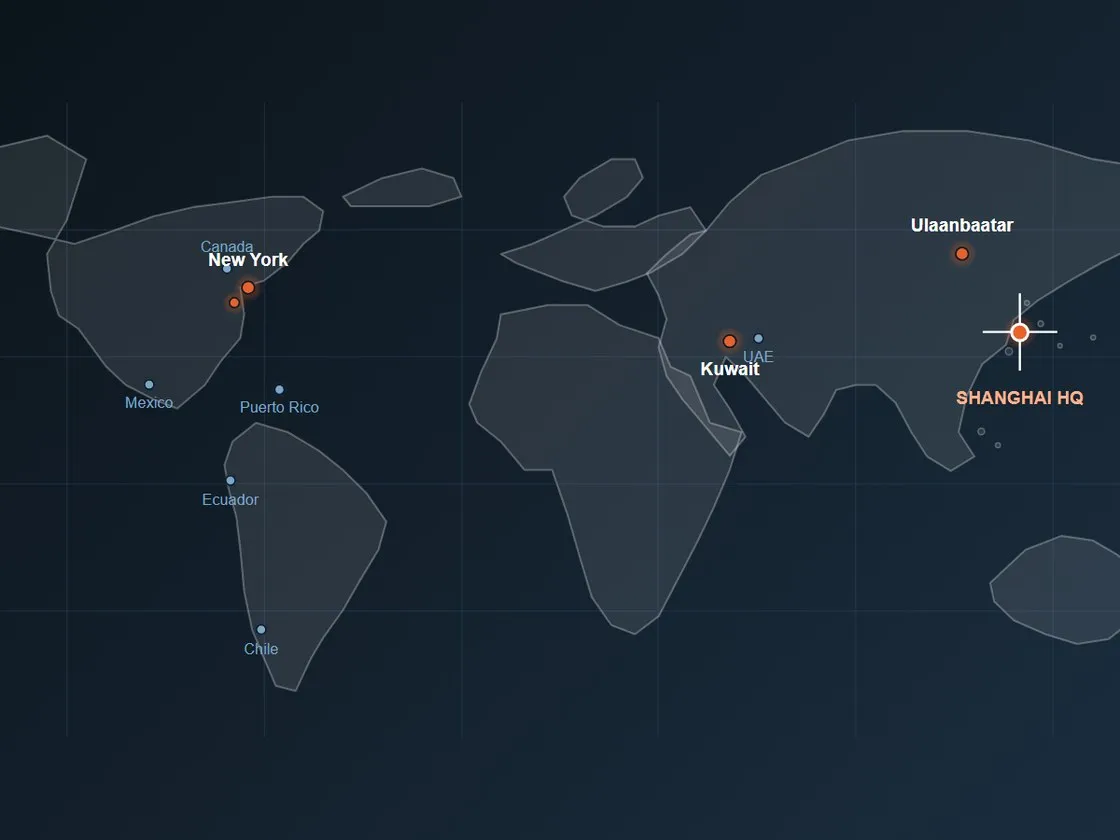
Hanart has delivered curtain wall systems to export markets since 2005, with active projects in the Middle East, Southeast Asia, Central Asia, and Africa. This geographic range has required the development of in-house expertise across GB/T 21086, AAMA/ASTM, EN/CWCT, and project-specific standards such as Dubai Municipality Green Building Regulations and Saudi Building Code amendments.
Our engineering team prepares multi-standard test packages in collaboration with third-party laboratories including Intertek, SGS, and CTC (China National Building Material Test & Certification Group). For each export project, we identify the full set of required tests during the tender stage and sequence the mock-up testing to minimise cost and schedule risk. Where a single test can satisfy multiple standards — for example, an ASTM E330 structural test that also demonstrates compliance with EN 12179 — we obtain dual witnessing and dual reporting from the laboratory.
Design documentation is produced in bilingual format as standard. English technical specifications are formatted to match AAMA or CWCT conventions, with load tables, deflection limits, and thermal performance data presented in both metric and imperial units where required. Chinese project files retain GB/T 21086 formatting for domestic reference and customs clearance. This dual-format output reduces consultant review cycles and avoids the translation errors that frequently delay project approvals.
For clients who have not yet finalised their target market, Hanart offers standard pre-study services during the schematic design phase. We map the project location against applicable national standards, identify the most stringent test requirements, and provide a compliance roadmap with estimated testing costs and lead times. This allows procurement teams to include realistic certification budgets in their feasibility assessments rather than discovering unbudgeted testing costs during the construction documentation phase.
Request multi-standard compliance support
If your project requires compliance with multiple curtain wall standards, Hanart's engineering and certification team can provide a unified compliance strategy from the earliest design stages. We deliver test-ready mock-up designs, coordinate third-party laboratory witnessing, and produce bilingual technical documentation formatted for the specific requirements of your target market.
Get Multi-Standard Compliance Support
You may also like:
Curtain Wall Performance Testing: Air, Water, Structural & Thermal
Facade Water Tightness in Extreme Climates: Design & Testing
Fire-Rated Curtain Wall Systems: Standards, Testing & Design