
In-House Fabrication: Where Quality Becomes Physics
A curtain wall's performance is decided twice — once in engineering, again in the factory. Every unitized panel we install is machined, assembled, sealed and checked in our own Qingpu facility, under the same ISO 9001 system that governs the drawing office and the site. Owning production is not a vertical-integration slogan; it is the reason lead times and quality are predictable — the two things overseas owners buy a facade contractor for.
- Hanart Engineering Services
- 27 October 2026
- 5 field photographs
Photographs from the Programme
Real Hanart site and factory photography — the discipline described below, seen in the field.
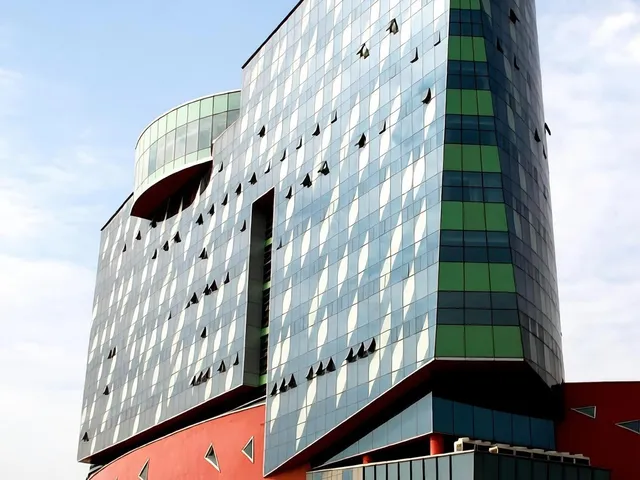
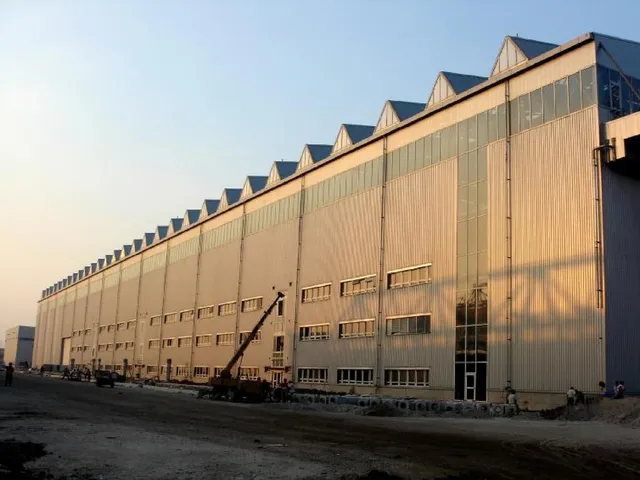
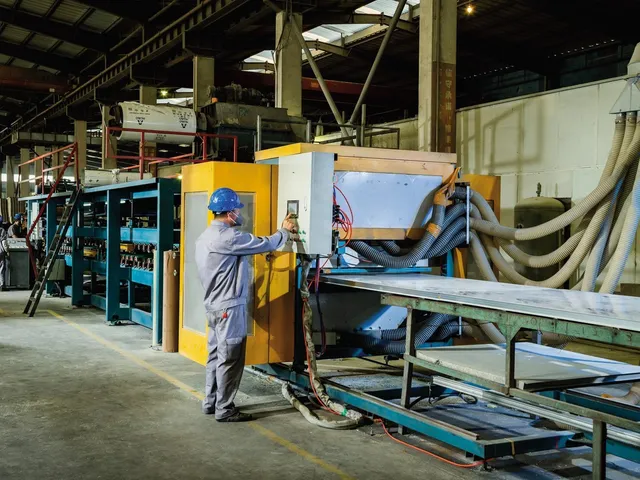
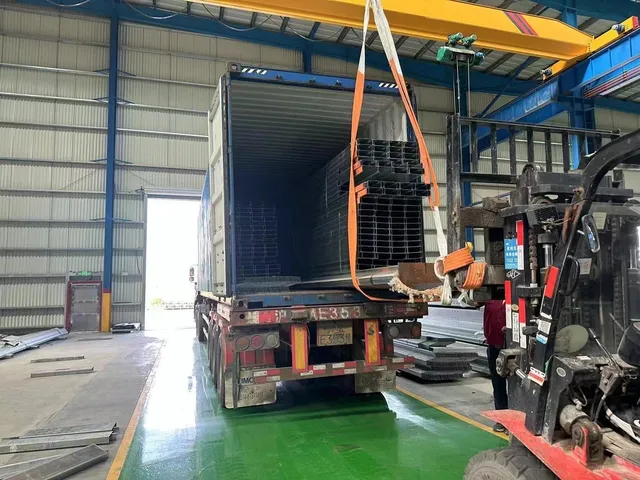
The Engineering View
The production line behind the panels
Fabrication starts where engineering ends: shop drawings feed directly into the production data, so the factory machines what the engineers verified and nothing else. The line is organized in four work cells:
The facility at Qingpu Industrial Park — a campus that also houses our engineering and project management teams — is open to client visits, and we recommend it: see a panel being built before you buy a thousand.
Panels that survive 12,000 km
A unitized panel is a precision product until it is lifted; transport is where carelessness undoes factory quality. Our packaging and shipping practice treats every voyage as part of the quality system:
The discipline was proven on the longest road we ship: 166 Perry Street, New York — unitized panels fabricated at Qingpu, sealed into containers, crossed the Pacific, and were erected in Manhattan to the owner's program. It is the export operation that turns "made in China" from a risk statement into a schedule statement.
Stage by Stage
Incoming inspection
Glass, profiles, fasteners, gaskets and sealants are checked against the purchase specification on arrival — dimensions, coatings, edge work and documentation. A defective batch is quarantined before it can poison production; suppliers know the standard, because they are held to it consistently.
In-process inspection
Hold-and-witness points are built into the line: frame geometry after assembly, glass setting and sealant bead profile after glazing, drainage verification before sealing. Each check has a written standard; each passed panel is signed off in the production record, traceable to the operator and the day.
Final & dispatch inspection
Before dispatch, every panel passes a seal-integrity verification — the visual, dimensional and adhesion check that catches the micro-defect that would become a site leak. Beyond that, representative panels go into the water and air testing regime per GB/T 21086 to confirm the production quality matches the engineering performance. Panels that fail any check are reworked or scrapped; they do not ship.
Seal integrity and the test cabinet
Water is the facade's oldest enemy, and it attacks at the seal — the seam between glass and frame, between panel and panel. Our testing discipline has two layers:
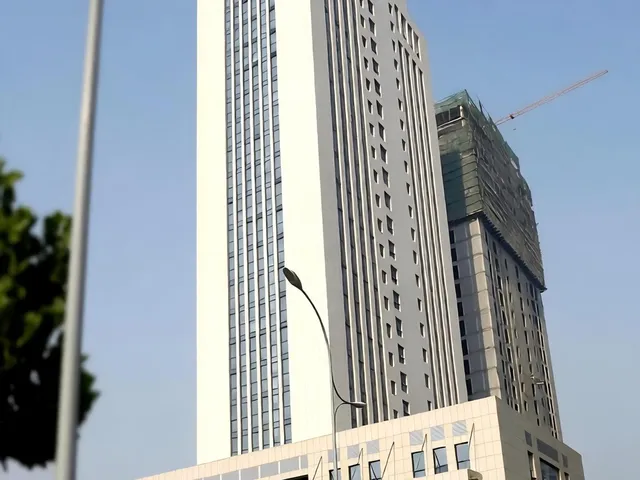
Senlan International Plaza
The factory-built unitized envelope whose quality won a Luban Prize — production records from Qingpu behind a national award.
Specifications & Standards Referenced
- ISO 9001
- GB/T 21086
Traceability & Sources
- Read the full source article: In-House Fabrication: Where Quality Becomes Physics — source page
- Project file: Tianjin Airbus Assembly Line — Standing-seam metal roof on an aerospace assembly hall — Luban Prize 2009.
- Facade Installation: The Underestimated Stage — related note
- Metal Roofing Basics for Facade Clients — related note
- Facade Standards Hub — test methods cited across the library
Have a project with this scope?
Send drawings, get a facade proposal in 24 hours — engineered, fabricated and installed by one contractor, one responsibility.